
💎 Crystal
health
Caffeine — How Much Is Actually Too Much?
400 mg is the safe ceiling for most adults. Here's what that looks like in coffee, energy drinks, and soda — and where the real risks start.
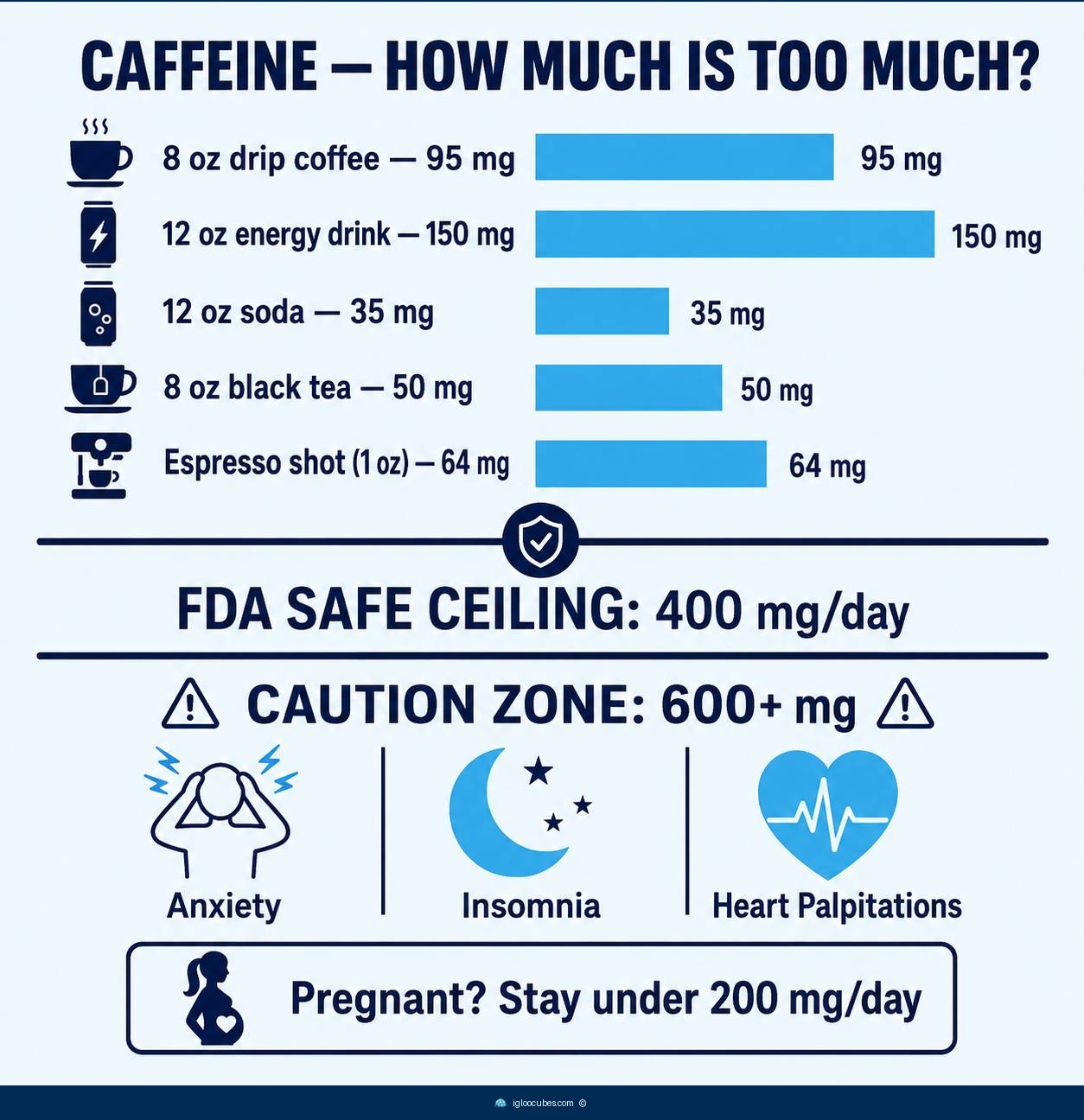
- The FDA says 400 mg of caffeine per day — about 4 small cups of coffee — is safe for most healthy adults.
- Above 600 mg per day, the risk of side effects like anxiety, insomnia, digestive issues, and rapid heartbeat goes up sharply.
- Energy drinks are more dangerous than coffee at the same caffeine level because the large volume of liquid consumed quickly can mask the caffeine dose.
- Pregnant people should stay under 200 mg per day, and anyone with anxiety disorders or heart conditions should talk to a doctor about their personal tolerance.
Most people know caffeine can keep them awake. Fewer know where the line is between “effective” and “too much.”
The general rule: 400 mg of caffeine per day is safe for healthy adults. That’s about four 8-ounce cups of brewed coffee, two 12-ounce energy drinks, or ten cans of soda. Spread it out, and most people handle it fine.
Above 600 mg — roughly six cups of coffee — the risks shift. Insomnia, jitters, upset stomach, and a racing heart become likely. At very high doses (1,000+ mg), caffeine toxicity is possible.
The hidden problem: Caffeine content varies wildly. A “small” coffee at one shop might have 150 mg while the same size at another has 300 mg. Energy drinks often pack their caffeine into a few ounces, encouraging fast consumption. A 16-ounce energy drink can hit 200+ mg in minutes — equivalent to two coffees before you finish the can.
The takeaway: Know your sources, count your cups, and pay attention to how you feel. If caffeine makes you anxious or keeps you from sleeping, you’re over your personal limit — even if you’re under 400 mg.