
💎 Crystal
beauty
Dark Circles Under Eyes — Causes vs Solutions
Dark circles are three different problems requiring three different fixes. Here's how to identify yours.
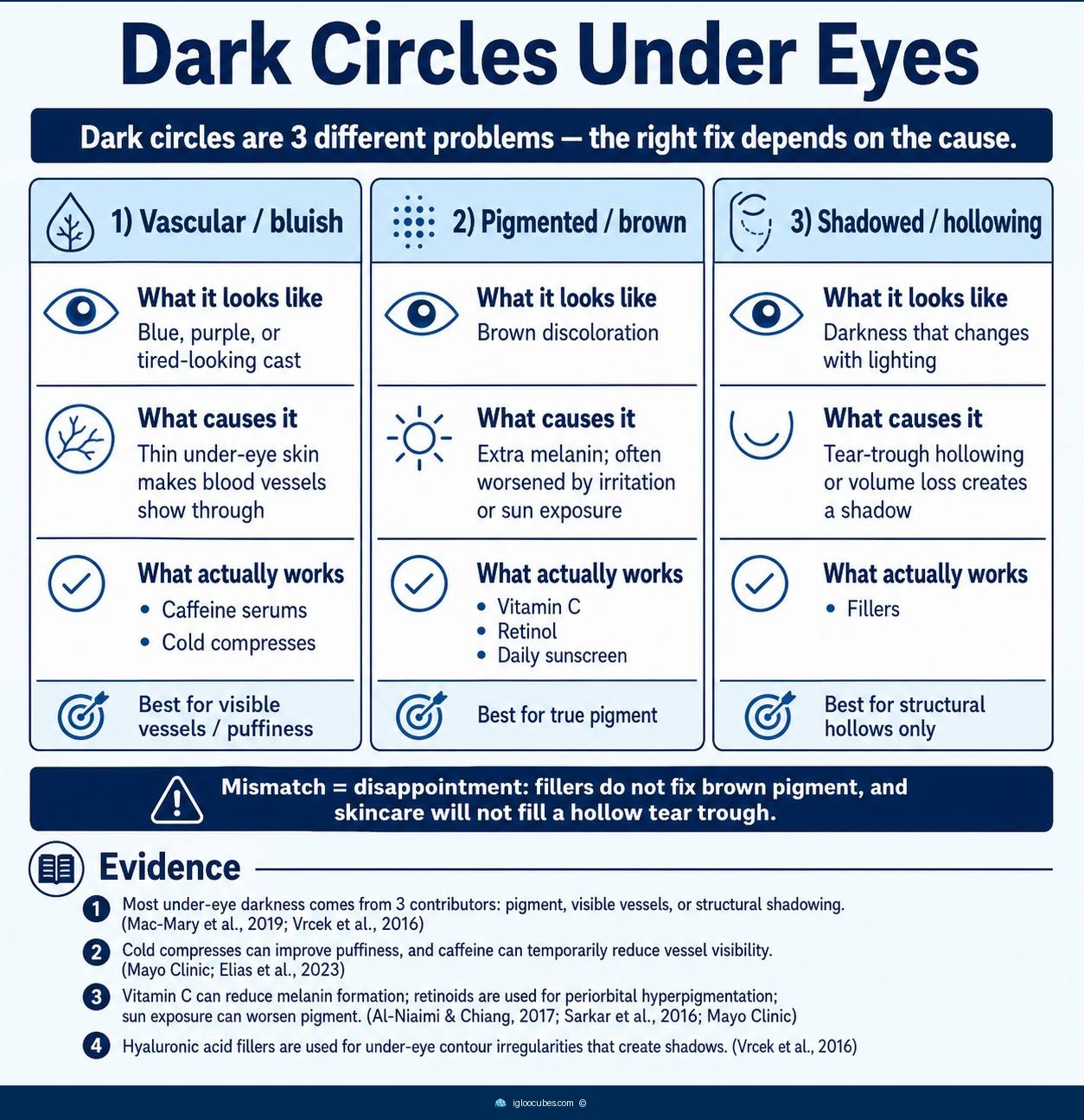
- Vascular dark circles (blue/purple) come from thin skin showing blood vessels — caffeine serums and cold compresses constrict them temporarily.
- Pigmented dark circles (brown) come from excess melanin — vitamin C, retinol, and daily sunscreen are the only things that help over time.
- Shadowed dark circles come from tear-trough hollowing or volume loss — no cream fixes this, only fillers from a professional.
- Most people have a mix. Pinch the skin — if it darkens, it's vascular. If the color stays the same when stretched, it's pigmented. If there's a visible divot, it's shadow.
The reason most people try three different eye creams and none of them work: dark circles aren’t one problem. They’re three.
Vascular (blue/purple) — the skin under your eyes is thin enough that you can see the blood vessels underneath. It looks worse when you’re tired or dehydrated because blood pools. Caffeine serums constrict the vessels temporarily. Cold compresses help too. This is the most common type and the most treatable with over-the-counter products.
Pigmented (brown) — excess melanin creates a brownish discoloration, often genetic or worsened by sun exposure and eye rubbing. This won’t respond to caffeine. You need vitamin C (to inhibit melanin production), retinol (to increase cell turnover), and sunscreen every single day. Results take months.
Shadowed (hollowing) — a tear-trough depression or volume loss creates an actual shadow regardless of skin color. No cream can fill a hollow. This needs hyaluronic acid fillers from a qualified injector.
The pinch test: gently stretch the skin under your eye. If the dark area gets darker, it’s vascular. If the color stays the same, it’s pigmented. If there’s a visible dip or groove, it’s shadow. Most people have a mix of two.