
💎 Crystal
recipes
How to Tell if Chicken Is Cooked — Without a Thermometer
Clear juices, firm texture, no pink. The three visual checks that work when you don't have a thermometer handy — and why 165°F is still the only guarantee.
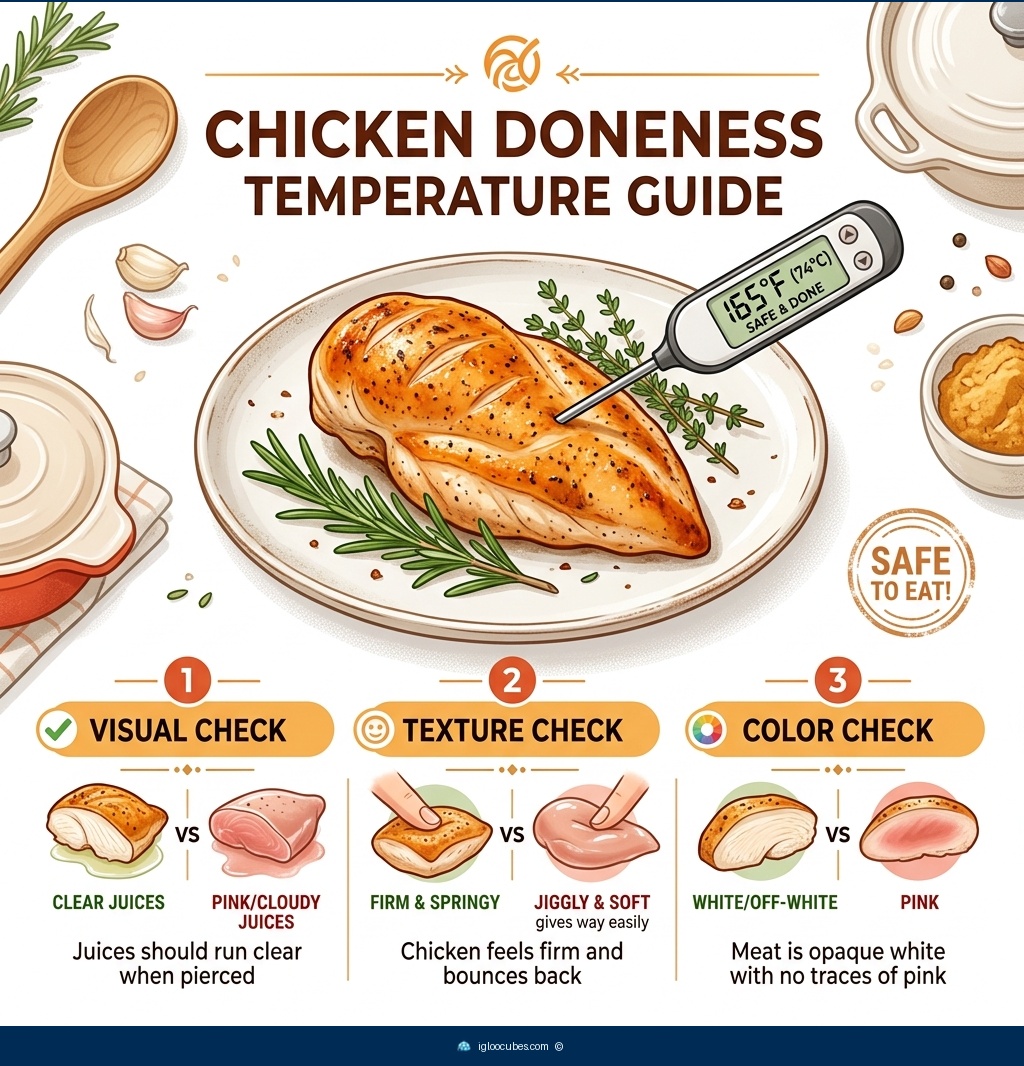
- Juice test: pierce the thickest part — clear or tan juices mean done; cloudy or pink means undercooked.
- Texture test: fully cooked chicken feels firm and springs back; undercooked chicken is jiggly or soft when pressed.
- Color test: white or off-white throughout at the thickest cut; any pink or translucent flesh needs more time.
- Dark meat is naturally pinker — texture is a better doneness indicator than color for thighs and drumsticks.
- A meat thermometer at 165°F (74°C) is the only truly reliable check. These visual tests are good backups, not guarantees.
A meat thermometer is the only way to be absolutely certain chicken has reached 165°F (74°C) — the USDA safe minimum for poultry. But thermometers get lost, batteries die, and sometimes you’re cooking at someone else’s kitchen with none in sight. These three checks get you close.
The Juice Test
Pierce the thickest part of the chicken with a knife tip or skewer and look at the liquid that runs out.
- Done: Clear juices, possibly with a pale tan tint from caramelized proteins.
- Not done: Cloudy or pink-tinged juices.
This is the most widely cited home-cook test and it works reasonably well for whole pieces and bone-in cuts. It’s less reliable for ground chicken or very thin cuts where juices don’t pool the same way.
The Texture Test
Press the thickest part of the meat with your finger or the back of a fork.
- Done: Firm with a slight spring-back, like the base of your thumb when your hand is relaxed.
- Not done: Jiggly, soft, or gives way easily when pressed.
- Overcooked: Hard, dry, and dense.
This is actually the most reliable of the three visual checks. The muscle fibers contract and firm up as chicken cooks through, and the change in texture is consistent across cuts.
The Color Test
Cut into the thickest part and look at the center of the meat.
- Done: White or off-white throughout. No translucent or pink areas.
- Not done: Any pink or translucent flesh at the center.
A caveat for dark meat: thighs and drumsticks contain more myoglobin (the protein that gives meat its color) and will naturally look slightly pinker even when fully cooked. For dark meat, texture and juice color matter more than the color of the meat itself.
When Visual Checks Fall Short
These tests work best for whole chicken breasts, thighs, drumsticks, and bone-in cuts. They are less reliable for:
- Ground chicken: Visual doneness is inconsistent with ground poultry because the surface browns faster than the interior. A thermometer is genuinely important here.
- Thin cuts: Chicken cutlets, tenders, and butterflied breasts cook so fast that visual signs appear almost instantly — and don’t tell you whether the center actually hit safe temperature.
- Nuggets or breaded pieces: The coating browns well before the inside is done. Don’t judge by the crust.
The Bottom Line
The juice test, texture test, and color test are useful kitchen heuristics that work most of the time for whole cuts. But food safety isn’t about “most of the time.” If you cook chicken regularly, spend the $12 on a digital instant-read thermometer. It’s the only check that doesn’t guess.