
💎 Crystal
home
Mold vs Mildew — When to DIY vs Call a Pro
Surface mildew on tile is a DIY job. Structural mold in drywall needs a professional. Here's how to tell the difference.
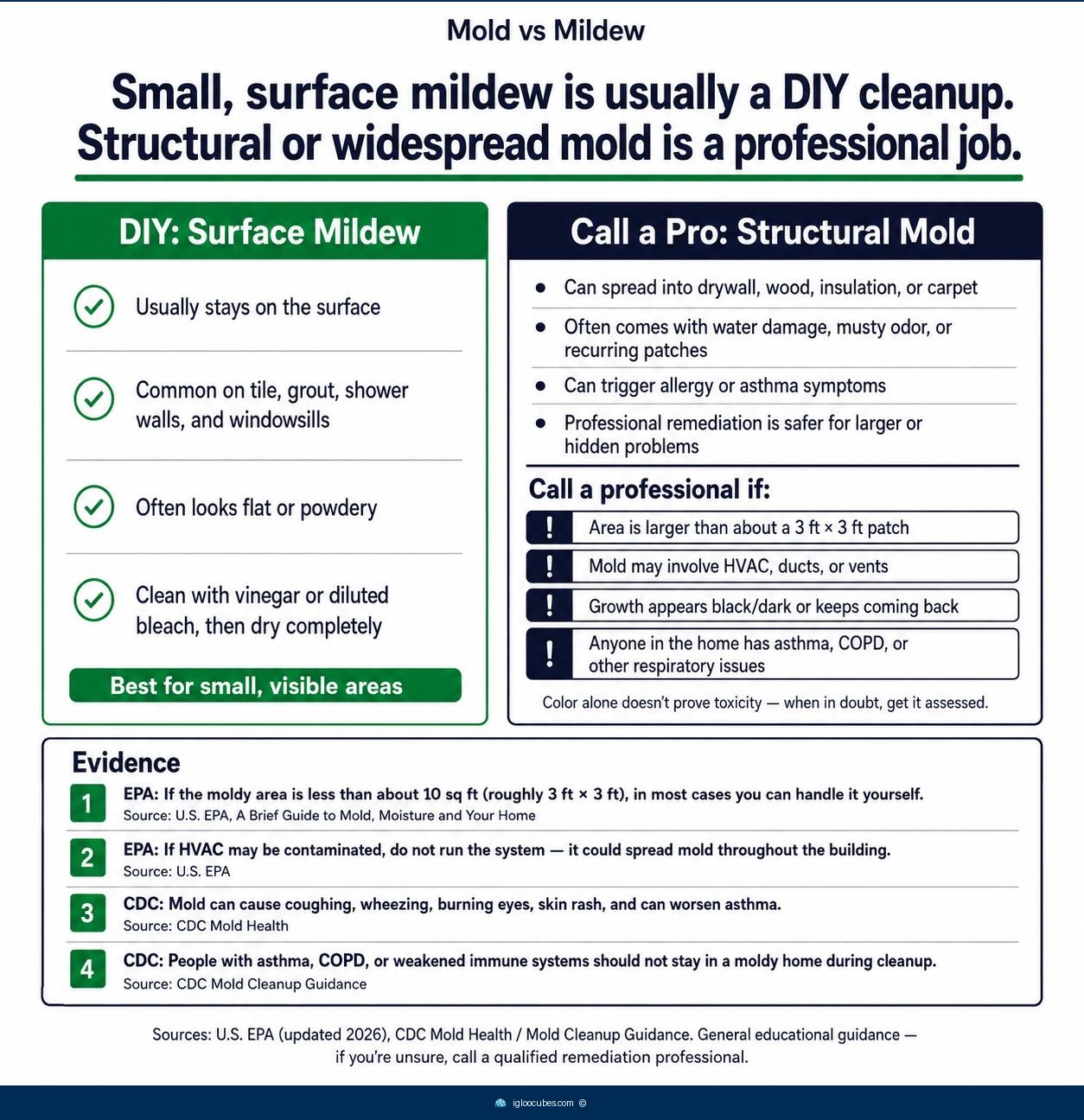
- Mildew is surface-level, flat, and powdery — clean it yourself with vinegar or diluted bleach on tile and grout.
- Mold that spreads into drywall or wood, covers more than 3x3 feet, or involves your HVAC system needs a professional remediation company.
- Call a pro immediately if anyone in the home has unexplained respiratory symptoms or allergic reactions that improve when they leave the house.
- The EPA recommends fixing the moisture source first — no cleaning method will keep mold away if there's still a leak or humidity problem.
Mold and mildew aren’t the same thing, and treating them the same way is the most common mistake homeowners make.
Mildew is a surface fungus that grows on damp surfaces like shower tile and window sills. It’s flat, powdery, and usually white, gray, or yellow. You can clean it yourself with household products.
Mold can penetrate into building materials like drywall, wood, and insulation. It’s fuzzy or slimy, often black or dark green, and it releases spores that can cause real health problems. Once it’s inside your walls, bleach won’t reach it.
The decision is simple: if it’s on a non-porous surface and smaller than a dinner plate, you can DIY it. If it’s in drywall, larger than 3x3 feet, in your HVAC system, or anyone in the house is having respiratory issues, call a professional. Fix the leak or humidity source first — otherwise it comes back no matter how well you clean.