
💎 Crystal
health
Sunscreen and SPF — What the Numbers Actually Mean
SPF 15 blocks 93% of UVB. SPF 30 blocks 97%. SPF 50 blocks 98%. The difference between 30 and 50 matters less than whether you actually applied enough — and most people don't.
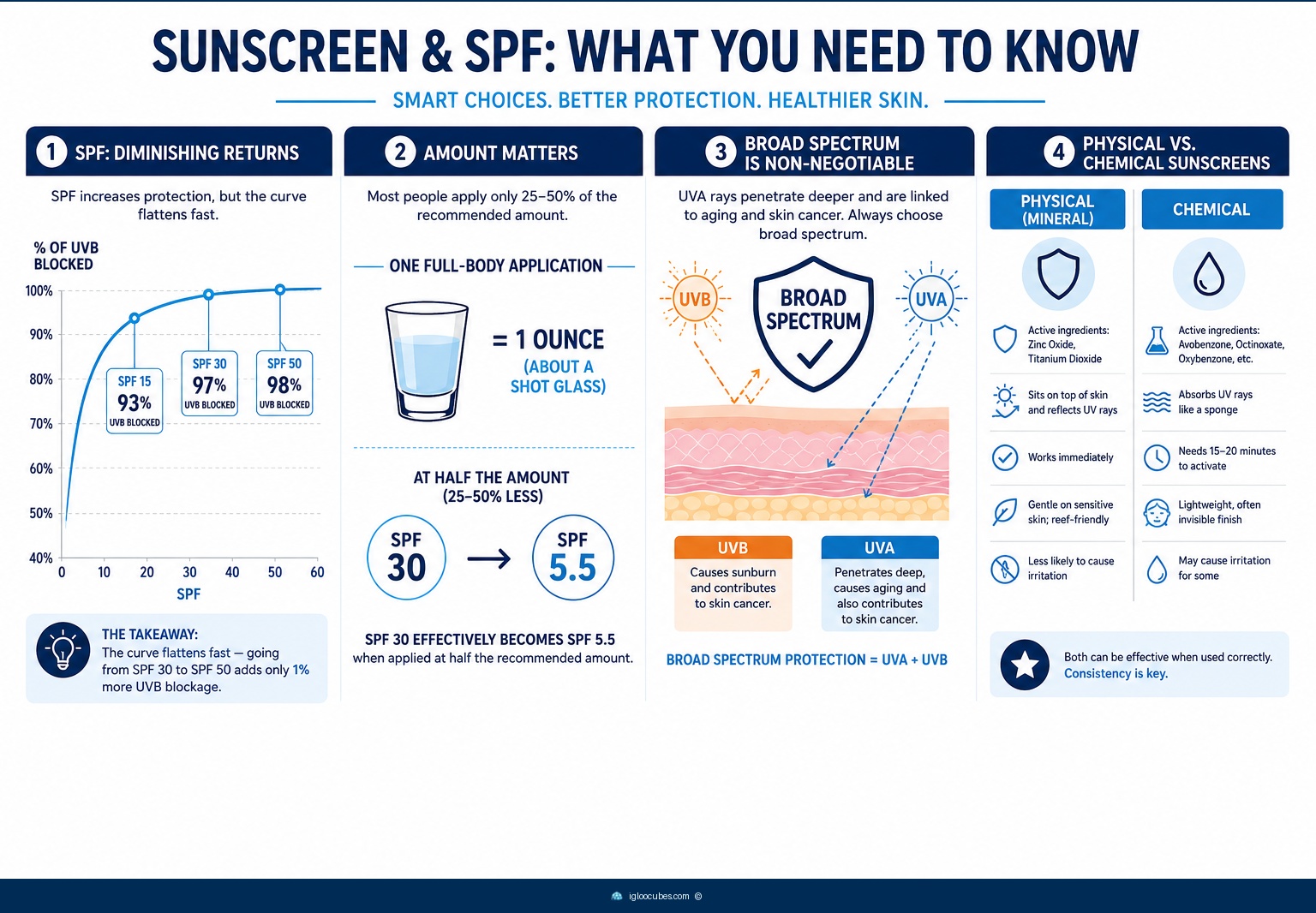
- SPF is not linear — the protection curve flattens fast. SPF 15 blocks 93% of UVB, SPF 30 blocks 97%, SPF 50 blocks 98%. Going from 30 to 50 adds only 1% more UVB blockage.
- Most people apply only 25-50% of the recommended amount. One full-body application needs one ounce — roughly a shot glass. At half that, SPF 30 effectively becomes SPF 5.5.
- Broad spectrum protection is non-negotiable — it's the only way to get UVA protection, which penetrates deeper and causes both aging and skin cancer.
- Physical (mineral) sunscreens with zinc oxide or titanium dioxide reflect UV rays like a shield. Chemical sunscreens absorb UV like a sponge. Both are safe and effective when used correctly.
Most people think sunscreen is a simple product, and SPF is just a rating scale from 1 to 100 that tells you how well protected you are. The reality is more useful — the numbers, the chemistry, and the application rules together determine whether you’re actually protected or just going through the motions.
SPF is not a percentage of total protection
The Sun Protection Factor measures how much UVB radiation it takes to redden sunscreen-protected skin compared to unprotected skin. SPF 15 means it takes 15 times longer for the skin to burn. But the jump from SPF 15 to SPF 30, or from 30 to 50, is much smaller than the numbers suggest:
- SPF 15 blocks about 93% of UVB rays
- SPF 30 blocks about 97%
- SPF 50 blocks about 98%
That means SPF 30 lets through roughly half the UVB that SPF 15 lets through — a meaningful jump. But SPF 50 lets through only about one-third less UVB than SPF 30. The curve flattens fast.
For daily use with limited sun exposure, SPF 30 is the sweet spot. For extended outdoor activity — beach days, hiking, outdoor sports, or working in the sun — SPF 50 or higher is the right choice, but only if you’re applying enough and reapplying on schedule.
The amount you apply matters more than the SPF number
Here is the most overlooked number in sunscreen: one ounce per full-body application. That is about a shot glass worth. Studies consistently show that most people apply 25 to 50 percent of the recommended amount.
This changes the math dramatically. If you apply half the recommended amount of an SPF 30 sunscreen, your effective protection drops to about SPF 5.5 — roughly the protection of a mid-range moisturizer with incidental SPF. The Skin Cancer Foundation recommends reapplying every two hours and immediately after swimming or heavy sweating, specifically because protection degrades over time and with activity.
Broad spectrum means it covers both types of UV
UVB rays cause sunburn. UVA rays penetrate deeper into the skin and cause premature aging and contribute to skin cancer. “Broad spectrum” on a label means the sunscreen protects against both.
UVA protection does not show up in the SPF number. SPF is a UVB-only measurement. If a bottle says “SPF 50” but does not say “broad spectrum,” you are getting excellent protection from burning but little to no protection from the deeper damage.
Physical vs chemical: two different mechanisms
Sunscreen works through two basic mechanisms:
Physical (mineral) sunscreens use zinc oxide or titanium dioxide to sit on top of the skin and reflect or scatter UV rays. These are generally less likely to cause irritation and work immediately upon application — no wait time needed. They tend to leave a visible white cast.
Chemical sunscreens use ingredients like avobenzone and octisalate to absorb UV rays and convert them into heat, which then dissipates from the skin. These take about 20 to 30 minutes to bind to the skin before they’re effective, but they tend to be cosmetically lighter and less visible.
Both types are FDA-approved as safe and effective. For people with sensitive skin or conditions like rosacea, dermatologists often recommend physical sunscreens because they are less likely to trigger irritation. For everyday wear under makeup, chemical sunscreens are usually preferred.
The one rule that matters most
Every source on sunscreen agrees on one thing: the best sunscreen is the one you will actually use consistently. That means finding a texture, finish, and application routine that you do not mind repeating every two hours. A perfect SPF 50 broad-spectrum sunscreen applied once in the morning is less protective than an SPF 30 applied correctly every two hours. Consistency beats the numbers every time.