
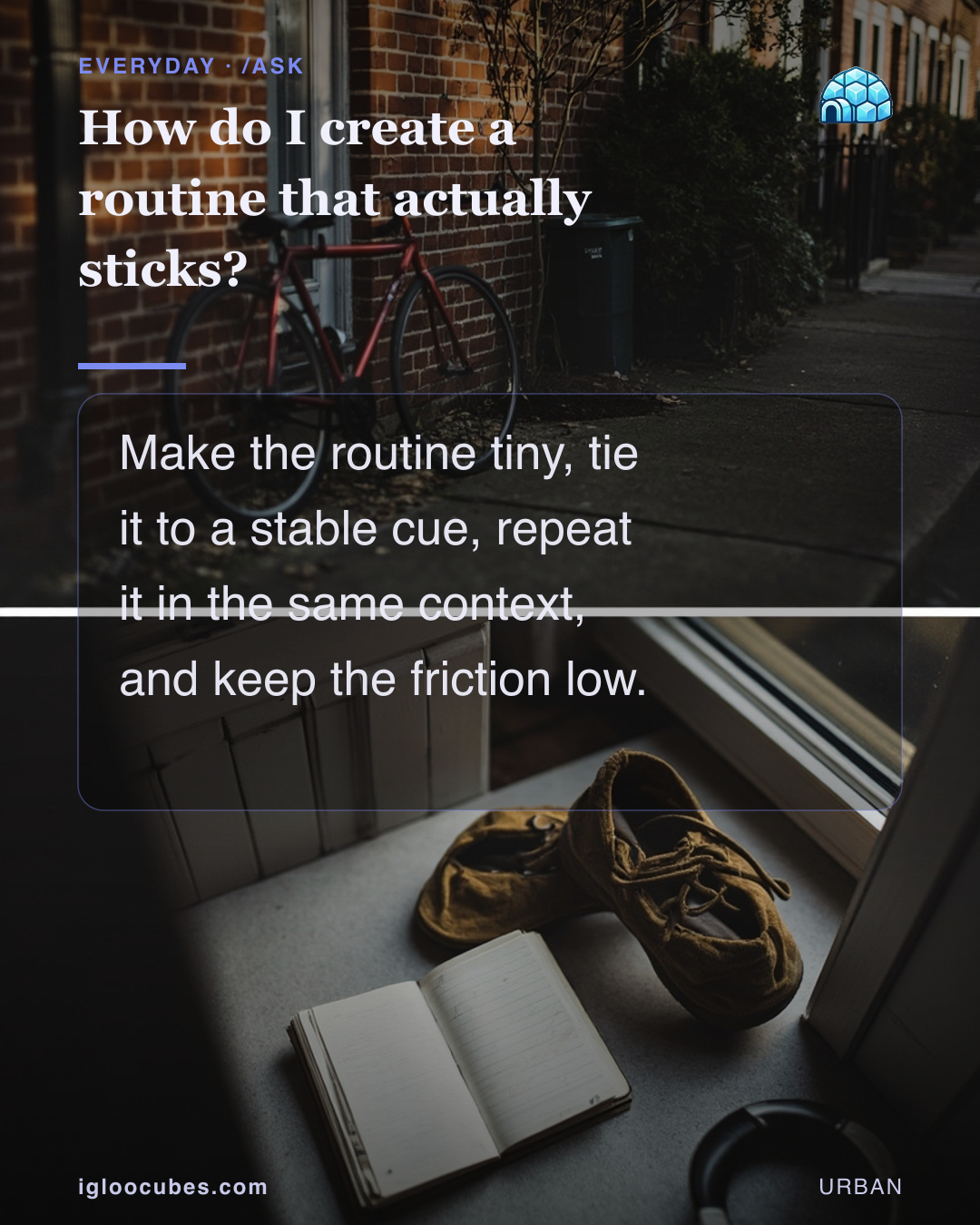
The routines that stick are usually the ones that get stupidly small. Habit research keeps pointing to the same idea: repetition in a consistent context matters more than motivation.
That means one cue, one action, and one easy repeat. After coffee, write one sentence. After brushing your teeth, put the charger on the nightstand. After dinner, set out tomorrow’s shoes. The behavior is small enough that you can do it even on a bad day.
A few things make it easier:
- Keep the cue the same every time
- Start with an action that takes under 2 minutes
- Track the streak so you can see it
- Remove steps that create friction
If a routine keeps falling apart, it is usually too big, too vague, or attached to a cue that is not reliable.
Sources
More in Everyday
Can family actually feel like freedom?
Yes — when family is structured as a secure base of mutual support rather than a scoreboard of obligations, the safety of having backup allows you to explore the world with less fear of carrying the load alone.
💡 Everyday 1 week ago 3 min readCan Stoic philosophy help resist corruption?
Stoicism can strengthen personal integrity by making small moral compromises harder to rationalize, but it cannot replace institutional rules and oversight.
💡 Everyday 1 week ago 3 min readDoes caregiving change what masculinity looks like?
Caregiving changes masculinity less by theory than by practice, because responsibility, patience, and consistency become part of the role.
💡 Everyday 4 weeks ago 3 min read