
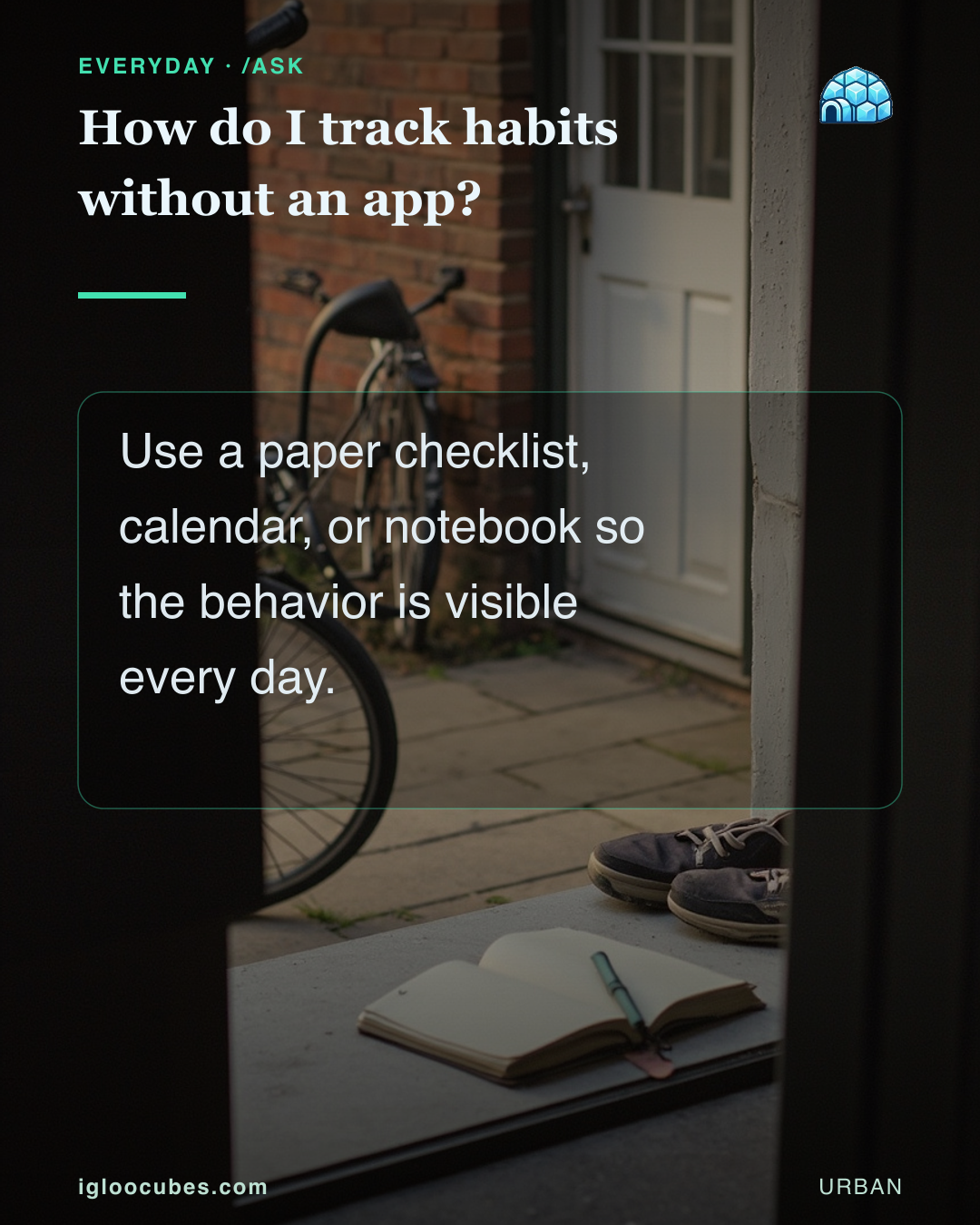
You do not need an app to track habits. The research side of habit formation leans heavily on self-monitoring, goal setting, and prompts or cues, which means the important part is seeing the behavior and reviewing it often.
A simple system works best: one habit, one mark per day, one place you always see it. A wall calendar, sticky note, or notebook can work just as well as software if you check it daily. Pair the tracker with a fixed cue like “after coffee” or “before bed” so the mark becomes part of the routine instead of another task to remember.
The biggest benefit of paper is that it stays visible. You do not have to unlock a phone, find the app, or get lost in a dashboard just to see whether today is a win.
The best tracker is the one that makes the streak obvious and the miss easy to notice.
Once the system is simple enough, the habit gets a little less negotiable.
Sources
More in Everyday
Can family actually feel like freedom?
Yes — when family is structured as a secure base of mutual support rather than a scoreboard of obligations, the safety of having backup allows you to explore the world with less fear of carrying the load alone.
💡 Everyday 1 week ago 3 min readCan Stoic philosophy help resist corruption?
Stoicism can strengthen personal integrity by making small moral compromises harder to rationalize, but it cannot replace institutional rules and oversight.
💡 Everyday 1 week ago 3 min readDoes caregiving change what masculinity looks like?
Caregiving changes masculinity less by theory than by practice, because responsibility, patience, and consistency become part of the role.
💡 Everyday 4 weeks ago 3 min read