
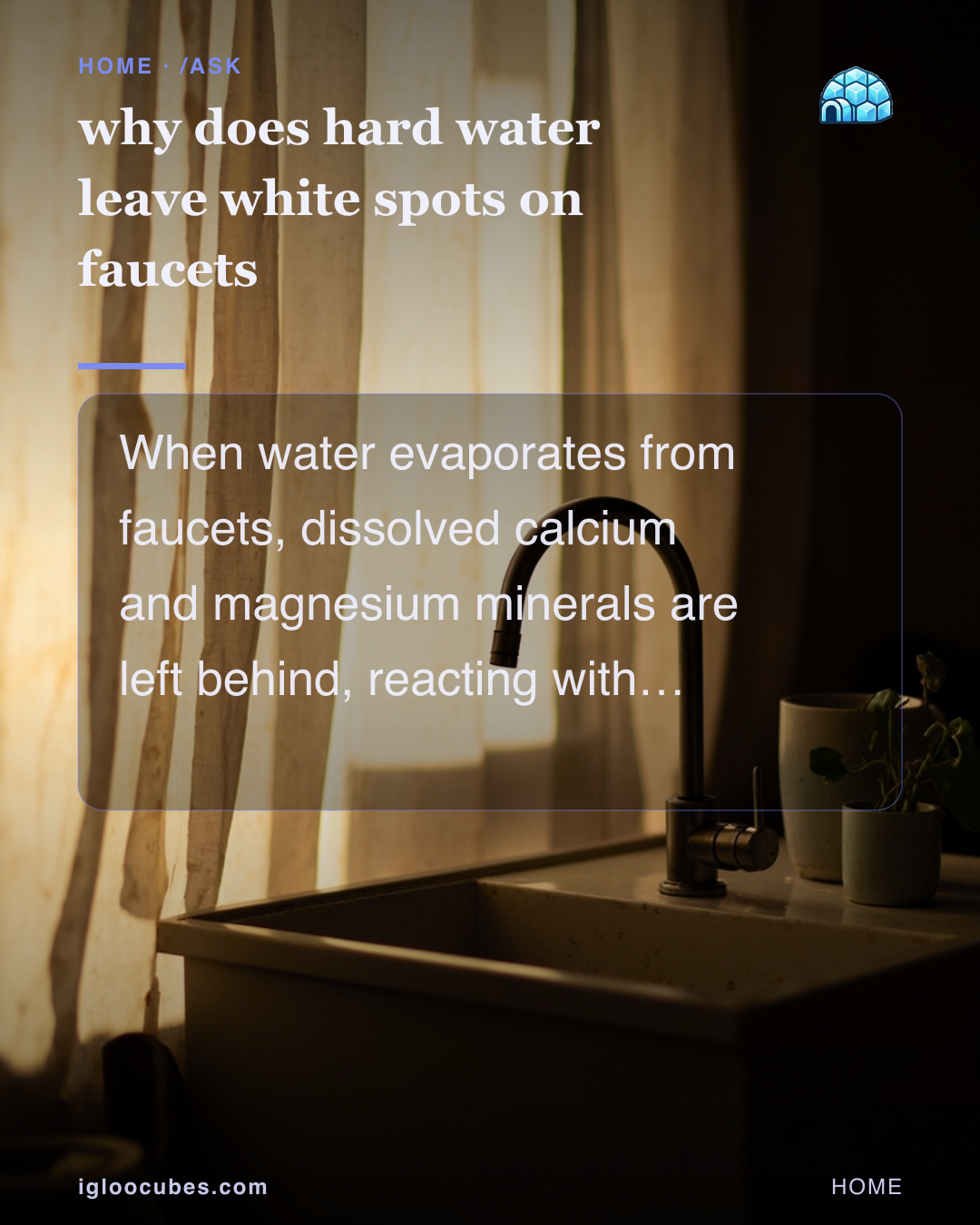
Those stubborn, chalky white spots on bathroom and kitchen faucets are the physical signature of hard water. Hard water is simply water that has run through underground rock formations, absorbing high concentrations of dissolved minerals along the way, primarily calcium and magnesium.
When hard water splashes onto a faucet, fixture, or glass surface, the pure liquid water slowly evaporates into the air. However, the minerals dissolved inside the water cannot evaporate. They are left behind on the surface as dry residues.
These mineral ions quickly combine with carbon dioxide in the air to precipitate into solid chemical compounds, mainly calcium carbonate and magnesium hydroxide. This white, crystalline crust is commonly called limescale or mineral buildup. Over time, these layers of mineral scale accumulate, locking onto metallic fixtures and becoming extremely difficult to wipe away with regular water or mild soap.
To dissolve these mineral structures, you need an acidic agent that can break down the carbonate bonds. While mild acids like distilled white vinegar can dissolve light deposits, tackling heavy limescale crusts often requires a specialized hard water stain remover to restore a clean, brilliant finish to your home fixtures.
More in Home & DIY
What is the best way to get rid of ants in the kitchen?
Eliminate food sources first, then use a bait gel or liquid that worker ants carry back to the colony.
🏠 Home & DIY 7 weeks ago 3 min readHow do I choose a box fan?
Choose a box fan for air movement, not miracle cooling: size it for the space, check noise, and use it as part of a heat plan rather than the whole plan.
🏠 Home & DIY 6d ago 3 min readHow do I choose a carbon monoxide alarm?
Buy a CO alarm that meets UL 2034, install it on every level and outside sleeping areas, and replace it before it ages out.
🏠 Home & DIY 1 week ago 2 min read