
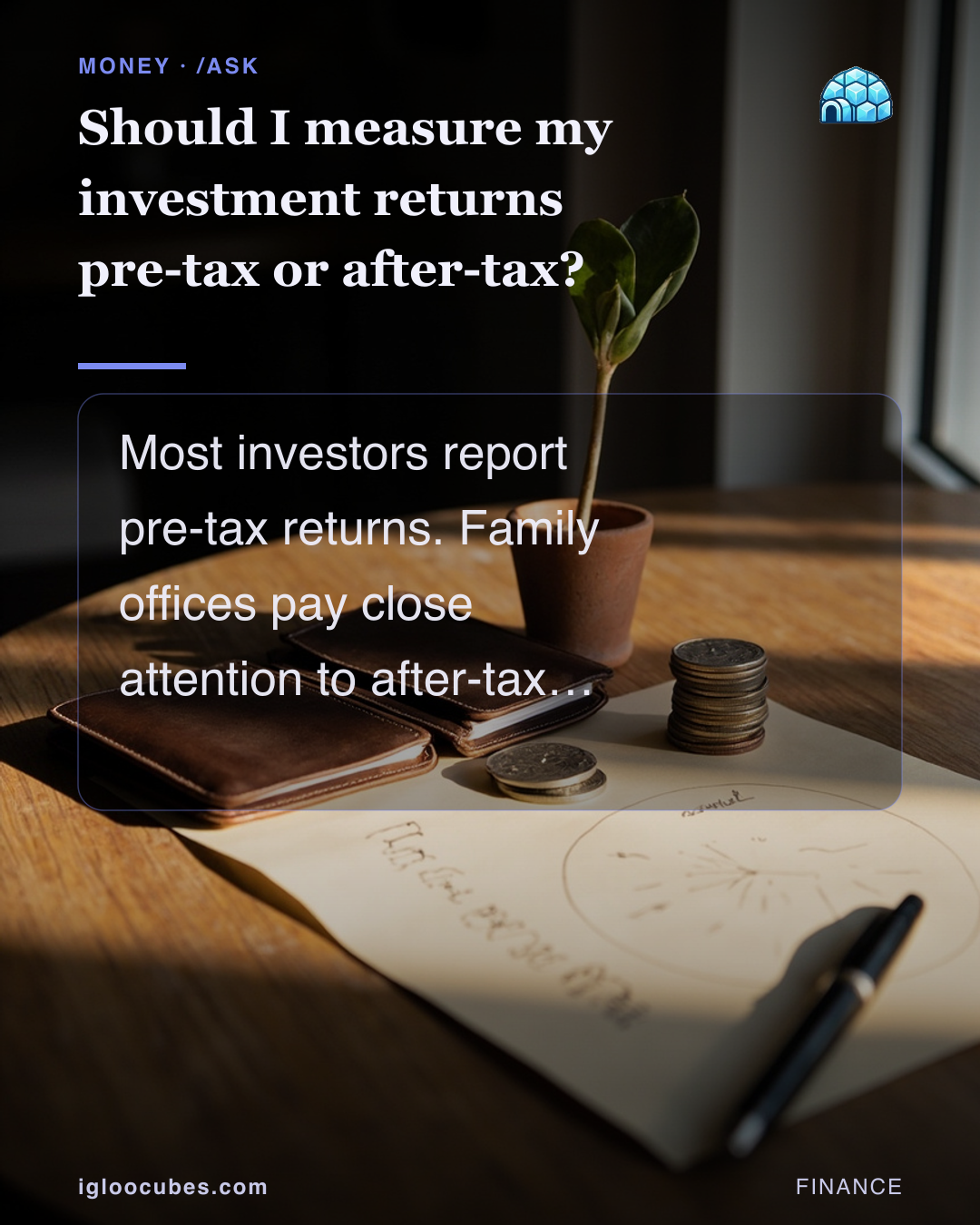
Pre-tax returns are the default because they are the easiest to calculate. Every fund, index, and brokerage report leads with them. But for anyone with a taxable investment account — not their IRA or 401(k), but a standard brokerage — after-tax returns are the number that actually matters, and almost nobody in the industry is incentivized to compute them correctly.
The basic math: if two portfolios both return 8% pre-tax but one generates $1,200 in realized capital gains while the other generates $200, the after-tax difference on a $100,000 position can be thousands of dollars a year. The difference compounds. Over a decade or two, a portfolio optimized for pre-tax performance that ignores tax drag can lag an after-tax-optimized alternative by a full percentage point or more annually.
This is why sophisticated family offices measure everything after-tax. Scott Abookire, the CIO of Pincus Capital Management, explained on the How I Invest podcast that his team treats after-tax return as the primary metric and pre-tax as a secondary input. The reasons most investors skip it are structural, not philosophical: after-tax calculation requires tracking realized gains across multiple account types, jurisdictions, and time periods, and most fund managers are evaluated on pre-tax numbers. They have no incentive to help you compute the version of the return you actually keep.
The practical takeaway for an individual investor is not to start an after-tax spreadsheet, but to pay attention to tax location. Broadly: put the least tax-efficient assets (REITs, high-turnover active funds, bond income) into tax-advantaged accounts first, and the most tax-efficient assets (broad index ETFs, muni bonds, buy-and-hold positions) into taxable accounts. That alone closes most of the after-tax gap. If you use a financial advisor and they don’t discuss tax location, they may be optimizing their reported performance, not yours.
Sources
This is general information, not professional financial advice. For decisions about your situation, talk to a qualified professional.
More in Money
Can Y’all Street outflank Wall Street?
Texas is building a real finance hub, but it is more likely to grow as a second center than replace Wall Street.
💰 Money 4 weeks ago 2 min readDo I have a spending plan?
You have a spending plan if you know what your money is supposed to do.
💰 Money 8 weeks ago 2 min readDo I have enough savings to handle a financial shock?
A good first test is one month of essentials, then three to six months.
💰 Money 8 weeks ago 2 min read