
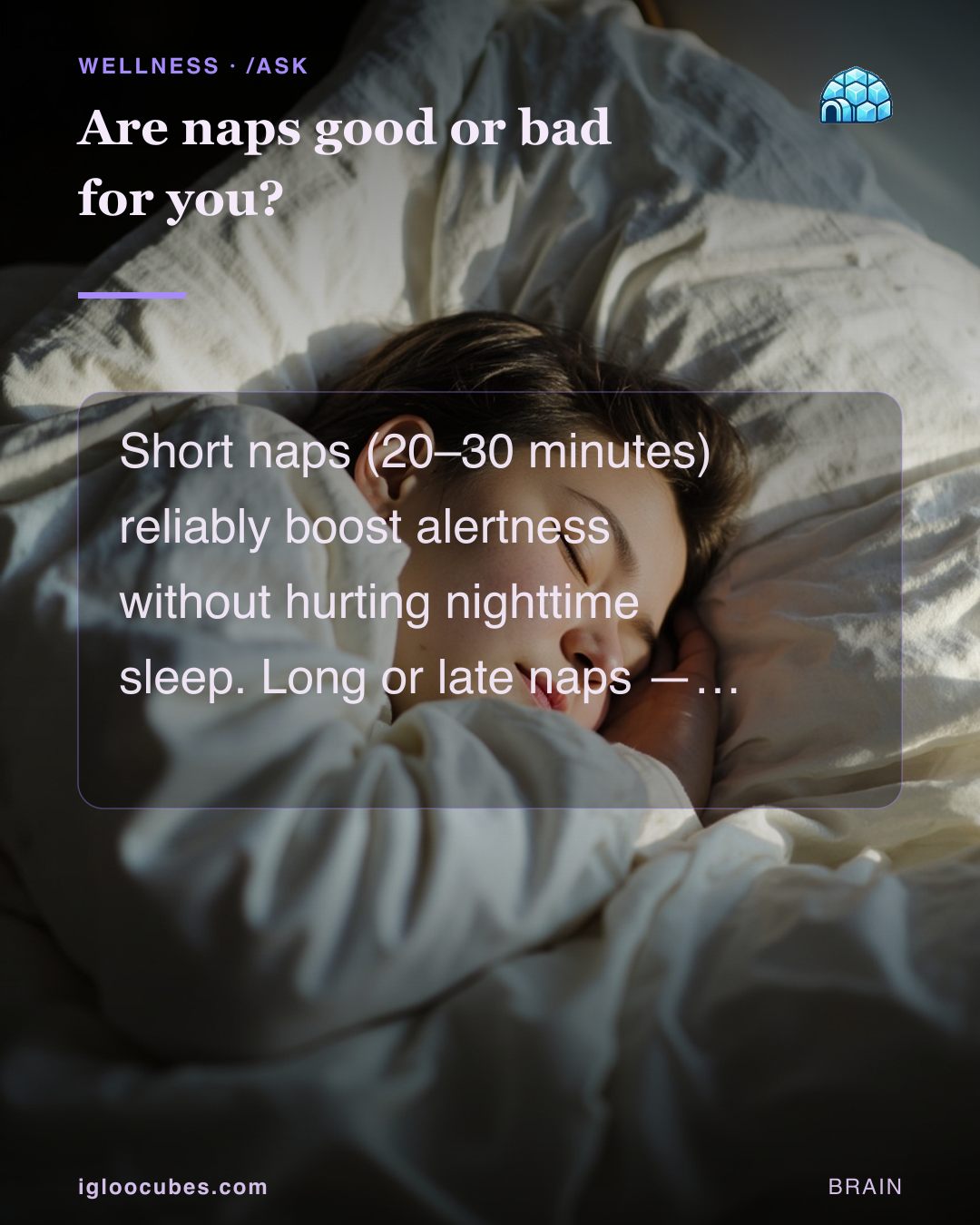
A short nap is one of the cheapest performance boosts available. NASA research on pilot fatigue found that a 26-minute in-flight nap improved performance by 34% and alertness by 54%, with effects lasting roughly two hours. That’s the good case.
Why short naps work. Twenty to thirty minutes lets you get into light sleep (Stage 2) without dropping into deep slow-wave sleep. You wake up before the deeper stages, so there’s no real “sleep inertia” — that groggy, head-foggy feeling that follows a long nap or a too-short night.
Why long naps backfire. Sleep an hour and you’ll almost certainly enter slow-wave sleep. Waking from that stage mid-cycle is what causes the heavy, disoriented feeling that makes people say naps don’t work for them. The same hour is also the window where your body may dip into REM sleep, which is closer to dreaming — waking from that can be even more disorienting.
Why late naps cause problems. A nap after about 3 p.m. shifts your sleep pressure — the biological drive that builds up during the day and pushes you toward bedtime. Reduce that pressure in the afternoon and your body isn’t ready to fall asleep at 10 or 11. For most adults, this means a noticeably worse night, followed by more fatigue the next day, followed by another nap — a loop that’s hard to break.
The practical rule:
- 20–30 minutes is the sweet spot. Set an alarm so you don’t drift into deep sleep.
- Before 3 p.m. — earlier if you already struggle to fall asleep at night.
- Don’t nap to replace a bad night. It feels like it helps, but the deeper stages of night sleep are the ones a nap can’t substitute for.
When naps are a warning sign. If you need a long nap most days to function, or you fall asleep involuntarily during normal activities (meetings, movies, driving), talk to a clinician. That’s not a nap problem — it’s usually a sign that nighttime sleep is broken, often by sleep apnea or an untreated sleep disorder.
Sources
More in Wellness
What are the benefits of daily meditation?
The largest meta-analysis to date found moderate evidence that meditation programs reduce anxiety, depression, and pain-related distress — with modest effect sizes and a clear dose-response to daily practice.
🧘 Wellness 8 weeks ago 2 min readCan most people actually handle polyamory?
Some people can, and a meaningful minority already are — but the structure only works with explicit consent, communication, and a willingness to do maintenance work most people underestimate.
🧘 Wellness 1 week ago 3 min readCan Stoicism help with modern corruption?
It can help with the personal cost of witnessing corruption — your own reactions, your own compromises, your own choices — but it is not a system for changing systems, and conflating the two is the most common mistake.
🧘 Wellness 1 week ago 3 min read