
💎 Crystal
everyday
The 50/30/20 Budget Rule — A Simple Way to Split Your Income
Half your take-home pay goes to needs, 30% to wants, and 20% to savings or debt. It's the simplest budgeting framework that actually works.
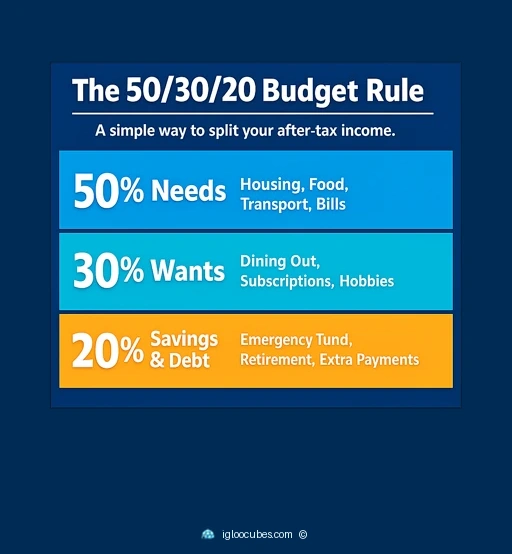
- 50% of after-tax income goes to needs — housing, groceries, utilities, minimum debt payments, transportation. If needs eat more than half, trim from the wants bucket.
- 30% goes to wants — dining out, subscriptions, hobbies, travel. This is the flexible slice that adjusts when your needs or savings targets change.
- 20% goes to savings and extra debt payoff — emergency fund, retirement contributions, paying down debt faster than the minimum. This is the slice that builds your future.
- The rule is a guide, not a test. In high-cost cities, needs often run past 50%. The point is noticing where your money goes, not hitting perfect splits.
The 50/30/20 budget rule splits your after-tax income into three buckets: 50% for needs, 30% for wants, and 20% for savings and debt payoff. It’s popular because it’s simple enough to run in your head without a spreadsheet.
The catch: the fixed percentages don’t fit everyone. In high-rent cities, “needs” alone often blow past 50%, which squeezes the other two buckets. Treat it as a benchmark for noticing where your money actually goes — not a rule you’ve failed if your numbers don’t match.