
💎 Crystal
recipes
Baking Cookies by the Numbers — The Science of a Perfect Batch
The perfect cookie comes down to four numbers: temperature, timing, patience for chilling, and portion size. Most baking problems are just one number away from a fix.
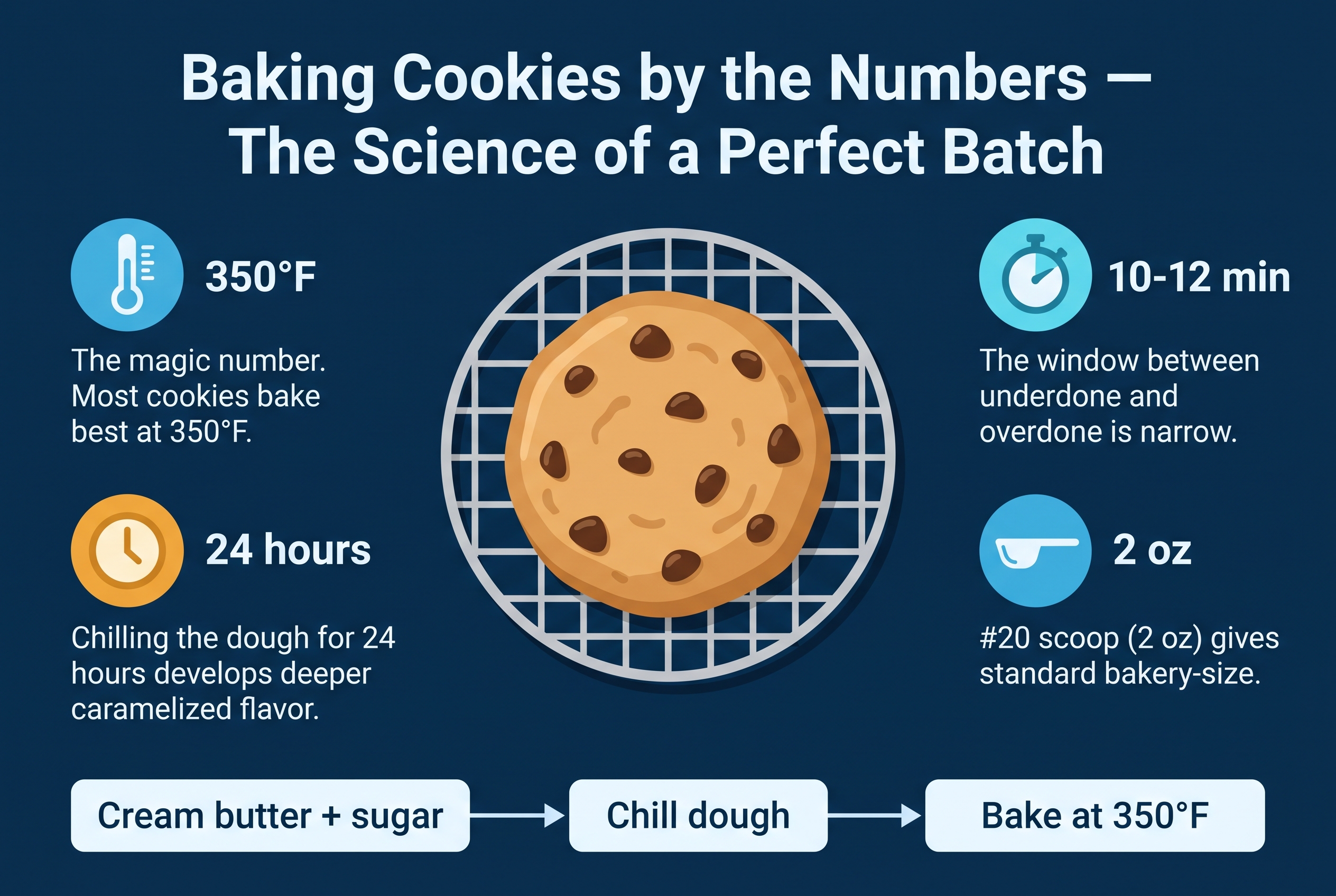
- 350°F is the sweet spot — hot enough for a caramelized edge but low enough to keep the center soft. Higher temps burn the bottom before the inside sets.
- Pull cookies at 10–12 minutes when the edges are golden and the centers still look slightly underdone. They finish baking on the hot sheet.
- Chilling the dough for at least 24 hours allows flour to fully hydrate and flavors to develop — the difference between a good cookie and a great one is often just a night in the fridge.
- A #20 scoop (2 oz, about 3 tablespoons) gives the standard bakery-size cookie. Consistent portions mean consistent bake times.
Baking cookies looks simple — mix, scoop, bake. But the difference between a flat, dry disk and a perfectly chewy cookie with crisp edges comes down to four numbers.
350°F is the standard for a reason. Most drop cookies bake best at 350°F. Go hotter and the outside sets too fast, leaving the center raw. Go cooler and they spread into flat pancakes before the structure firms up. A properly preheated oven — verified with an oven thermometer — is the single most common fix for inconsistent cookies.
The 10–12 minute window is tighter than most recipes admit. At 10 minutes, the edges will be golden and the centers will look puffy and slightly underdone. That is the moment to pull them. Cookies continue baking on the hot sheet from residual heat — overbaking by just 90 seconds can turn chewy into crunchy. Let them rest on the sheet for 5 minutes before transferring to a rack.
Chilling the dough is not optional for texture. A 24-hour rest in the fridge hydrates the flour fully, allows butter to resolidify (less spreading), and gives vanilla and sugar time to deepen. The difference is measurable: chilled dough produces cookies that are thicker, more caramelized, and more evenly browned.
Portion size controls your timing. A #20 scoop (2 oz) is the gold standard for drop cookies — big enough to have a soft center but not so large that the outside burns. Smaller scoops bake faster and run the risk of drying out. Larger scoops need lower temperature and longer time.
The science is simple. The execution just needs those four numbers right.