
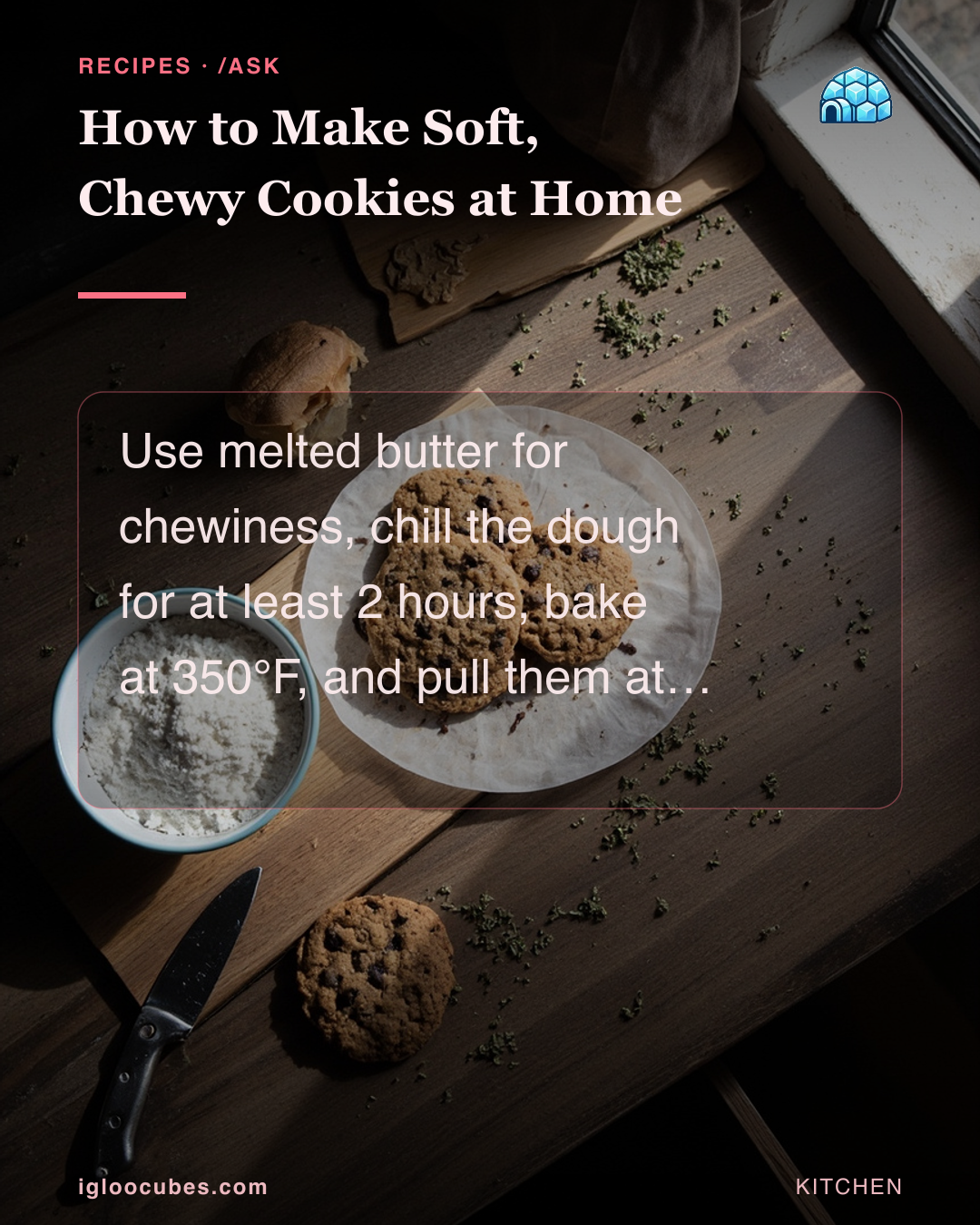
The difference between a soft, chewy cookie and a crispy one starts before the oven.
Use melted butter, not softened. Melted butter coats the flour proteins differently, reducing gluten formation. That means a more tender, chewy texture. Brown the butter for even more depth — it removes some water content and adds a nutty caramel flavor.
Don’t skip the chill. At least 2 hours in the fridge, ideally 24. Cold dough spreads less, so cookies stay thicker and chewier. The rest time also hydrates the flour fully and melds the flavors.
Two sugars, not one. A mix of white and brown sugar is standard, but more brown sugar means more moisture and a softer cookie. Brown sugar contains molasses, which is hygroscopic — it pulls moisture from the air and keeps cookies tender longer.
Bake at 350°F and pull early. Follow the 10–12 minute rule. The edges should be set and golden, but the center should still look slightly puffy and underdone. They’ll finish baking on the hot sheet.
Store with bread. A slice of sandwich bread in the cookie jar releases moisture that keeps cookies soft for days. Replace the bread slice when it dries out.
Sources
Want the full picture?
Baking Cookies by the Numbers — The Science of a Perfect Batch
The perfect cookie comes down to four numbers: temperature, timing, patience for chilling, and portion size. Most baking problems are just one number away from a fix.
More in Cooking
How do I boil eggs so they peel easily?
Use slightly older eggs, cool them fast, and peel under running water.
🍳 Cooking 4 weeks ago 2 min readHow do I choose a meal prep container?
Choose based on reheating, freezing, and lid fit, because the right container is the one that matches how you store food.
🍳 Cooking 1 week ago 3 min readHow do I cook a steak on the stove?
Pat the steak dry, salt it heavily, sear in a hot cast-iron pan with oil for 3-5 minutes per side, and cook to 145°F internal temperature for medium.
🍳 Cooking 6 weeks ago 2 min read