
💎 Crystal
money
The Cost of Debt Mismanagement — How to Balance Payoff and Investing
High-interest debt destroys wealth faster than almost anything else. Coordinating borrowing with investing makes the difference between treading water and building momentum.
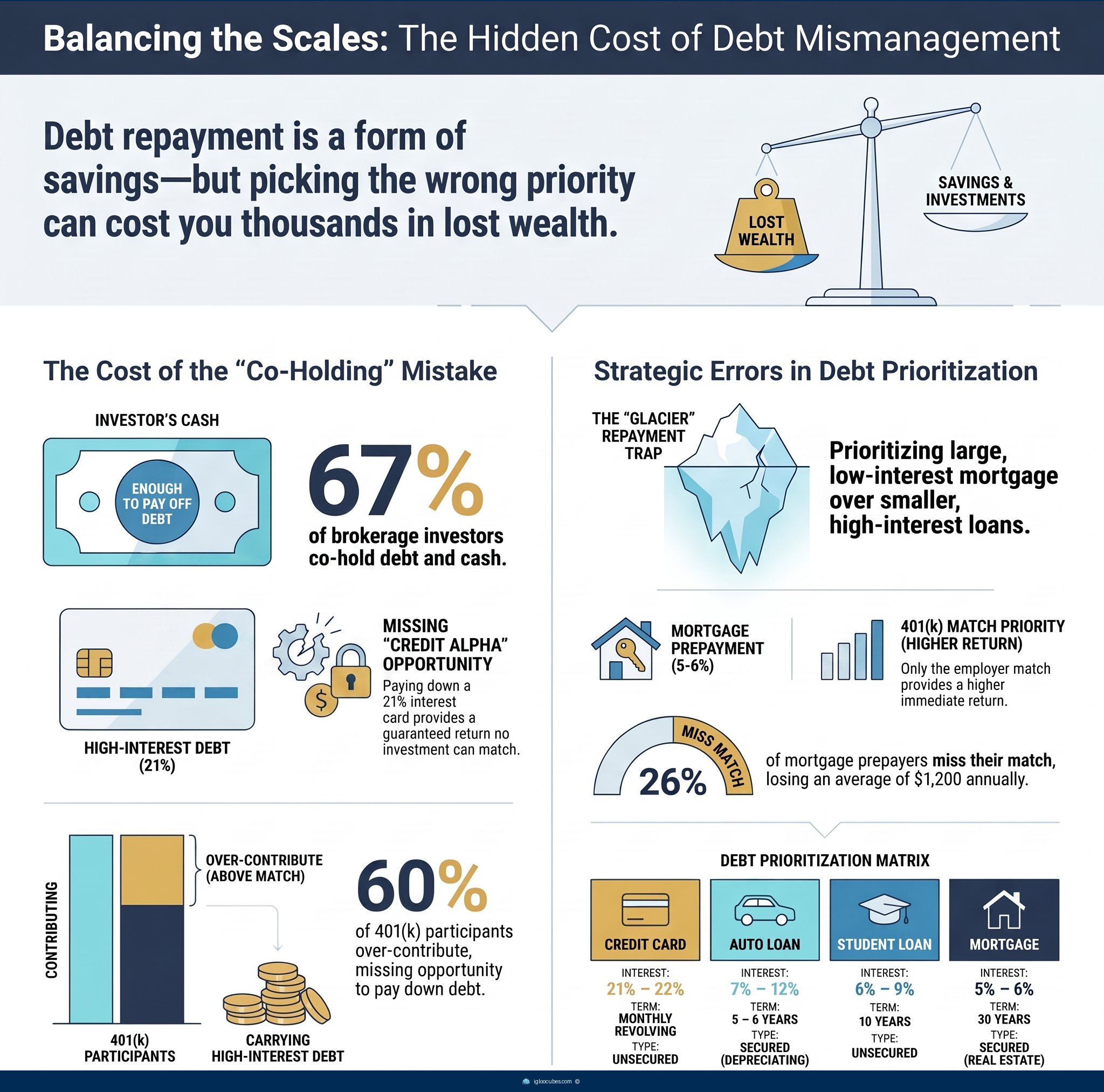
- Prioritize high-interest debt first (credit cards, payday loans) — avalanche method saves the most. Snowball works if you need psychological wins to stay motivated.
- Never prepay low-interest installment loans at the expense of employer-matched retirement contributions. That match is a guaranteed 50-100% return.
- Mortgage rate locks let you secure a rate against market swings before closing — use them, but understand the lock period and any extension fees.
- Credit union members typically get lower loan rates and fewer fees than bank customers. The difference compounds significantly over the life of a loan.
- You can negotiate credit card interest rates. A 15-minute phone call asking for a lower APR works more often than people expect, especially with good payment history.
Debt is a form of savings — at least when managed strategically. The goal isn’t to eliminate all debt as fast as possible; it’s to coordinate your borrowing and investing decisions so your balance sheet comes out ahead.
The biggest mistake: prepaying a 3-4% mortgage or student loan while leaving employer-matched 401(k) contributions on the table. That match is an instant 50-100% return. Nothing in the debt world beats that.
The second biggest mistake: carrying high-interest credit card debt while investing anything beyond the match. Credit card APRs (20-30%) destroy investment returns. Avalanche method (highest APR first) is mathematically optimal. Snowball method (smallest balance first) works if you need momentum to stay consistent.
Miscellaneous tools that help: mortgage rate locks protect against rising rates during the closing process. Balance transfers can buy you 0% APR windows. Bi-weekly mortgage payments shave years off the term. And a single phone call asking for a lower APR on your credit card works surprisingly often — especially if you have a clean payment history and mention competitor offers.