
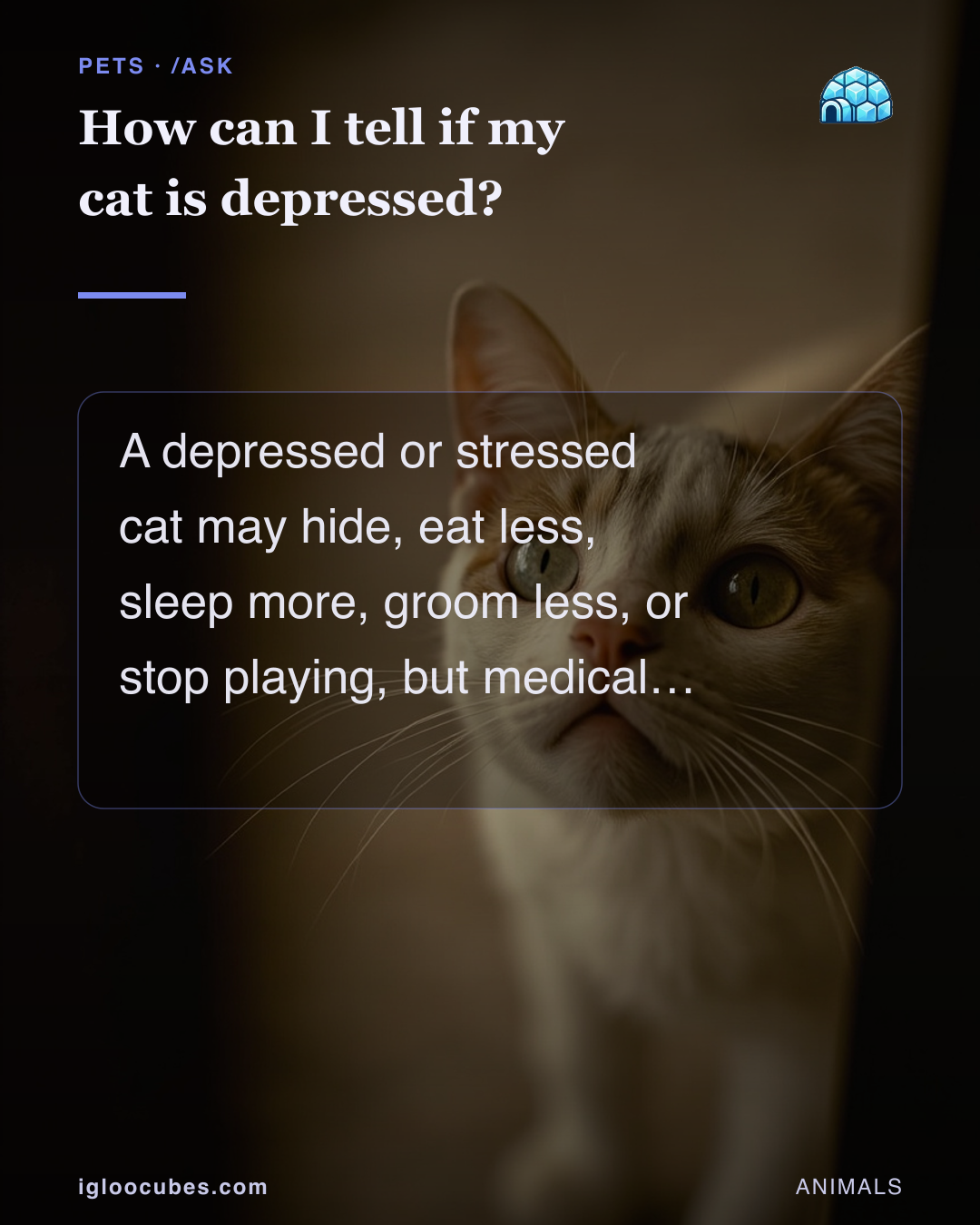
Cats do not wear their mood on their face the way people do, so the signs are usually behavioral. A cat that seems depressed may hide more, stop playing, eat less, sleep more, groom less, or become clingier or quieter than usual. After a loss, cats can also show mourning behavior, including reduced appetite, less interest in activity, and more time spent hiding.
The tricky part is that those same signs can also point to illness. Dental pain, thyroid problems, infection, cognitive decline, and other medical issues can all look like “sad cat” from the outside. That means a sudden behavior change is worth a vet visit, especially if it comes with weight loss, litter box changes, vomiting, or less appetite.
If the exam is normal, then the question shifts from disease to environment: routine, boredom, stress, or recent change at home.
Sources
More in Pets
Do I need pet insurance?
Pet insurance makes sense if an unexpected vet bill would strain your budget, especially while your pet is still healthy.
🐾 Pets 5 weeks ago 2 min readDo indoor cats need flea prevention?
Often, yes. Indoor cats can still pick up fleas from dogs, people, other animals, or a contaminated home.
🐾 Pets 4 weeks ago 2 min readHow did Burmese pythons end up in the Florida Everglades?
Burmese pythons got into the Everglades through a combination of pet-owner releases and the 1992 Hurricane Andrew destruction of a breeding facility; federal importation was banned in 2012 but the population remains.
🐾 Pets 3 weeks ago 3 min read