
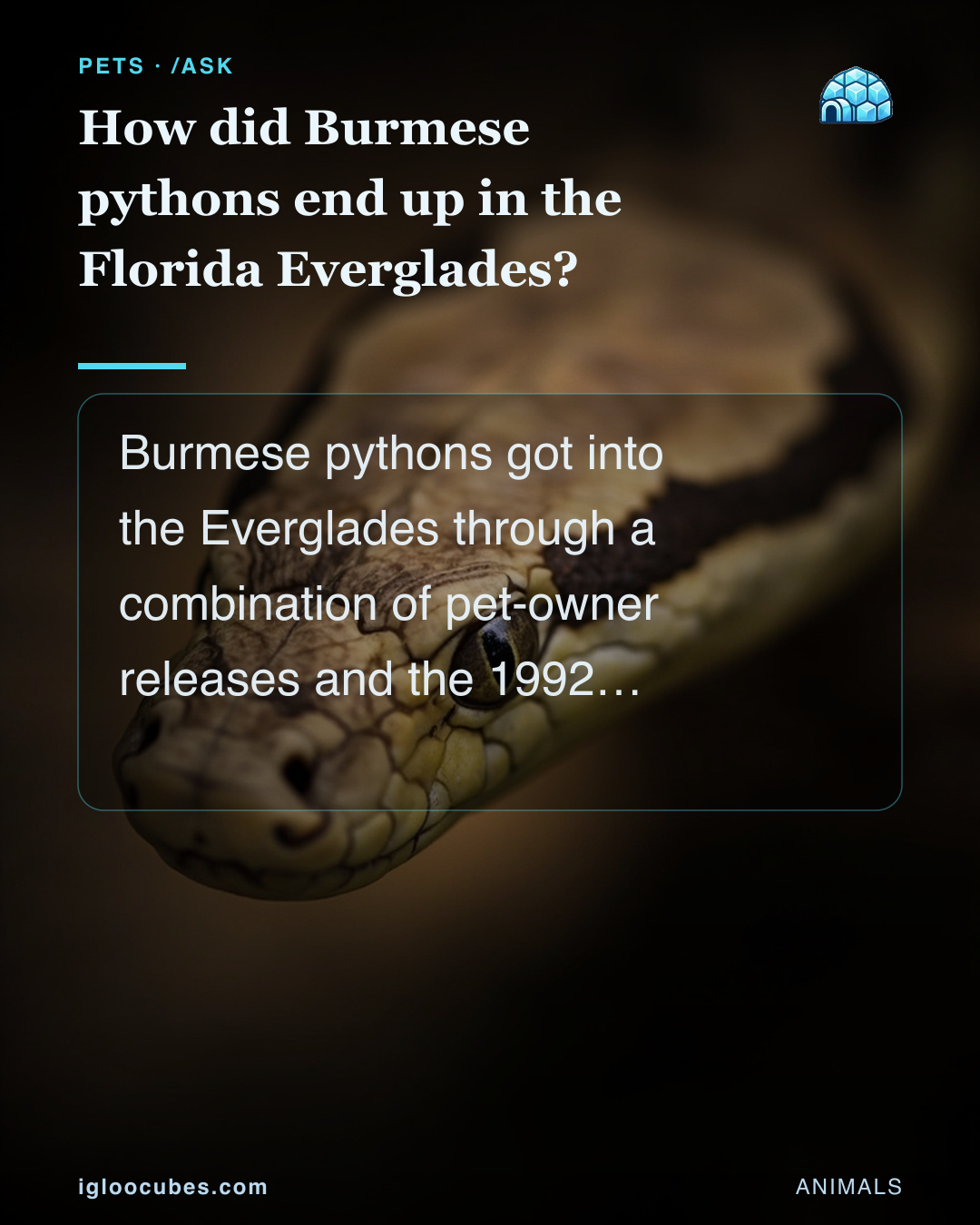
Burmese pythons (Python bivittatus) are native to Southeast Asia and first appeared in Florida through the exotic pet trade in the 1970s. The Everglades population grew into an established breeding colony over the next three decades, with the largest acceleration happening after one specific event.
The 1992 Hurricane Andrew is the most commonly cited cause. The Category 5 storm destroyed a python-breeding facility in southern Florida, releasing a large number of captive snakes into the adjacent swamps and the Everglades National Park. Pet-owner releases added to the same population over the same period: Burmese pythons grow from 2 feet to 12+ feet in a few years, and owners who bought them as hatchlings frequently decided they could no longer handle the animal once it was eating whole rabbits. Most evidence points to a combined effect rather than either one alone. By 2008–2010 there were more than 30,000 python sightings reported in the Everglades region.
The biological impact has been severe. A 2012 study by Dorcas and colleagues compared road-survey data from 1996–1997 (before population expansion) to 2003–2011 (after) and found sighting-frequency declines of 88% to 100% for raccoons, opossums, bobcats, marsh rabbits, and foxes in the python’s established range. Marsh rabbits reintroduced into Everglades National Park were extirpated by pythons in less than 11 months. The python’s generalist diet, ability to go months between meals, and lifespan of 20+ years make culling numbers alone very difficult.
Federal regulation was tightened in January 2012 when the U.S. Department of the Interior listed Burmese pythons under the Lacey Act, banning importation and interstate transport. Florida also classifies the species as invasive and runs active removal programs (Python Patrol, the South Florida Water Management District’s contractor program, and the annual Python Challenge). Despite those efforts, no successful eradication exists today.
If you own a large reptile and can no longer keep it, do not release it into the wild. Released pets are exactly how this problem started, and it’s both illegal and ecologically destructive. State fish and wildlife agencies in every state operate Exotic Pet Amnesty programs that take surrendered animals and route them to licensed sanctuaries: find a reptile sanctuary through Amazon search. The right place for a python you can no longer handle is a state-permitted facility, not a swamp.
Sources
More in Pets
Do I need pet insurance?
Pet insurance makes sense if an unexpected vet bill would strain your budget, especially while your pet is still healthy.
🐾 Pets 5 weeks ago 2 min readDo indoor cats need flea prevention?
Often, yes. Indoor cats can still pick up fleas from dogs, people, other animals, or a contaminated home.
🐾 Pets 4 weeks ago 2 min readHow can I tell if my cat is depressed?
A depressed or stressed cat may hide, eat less, sleep more, groom less, or stop playing, but medical causes can look the same.
🐾 Pets 3 weeks ago 3 min read