
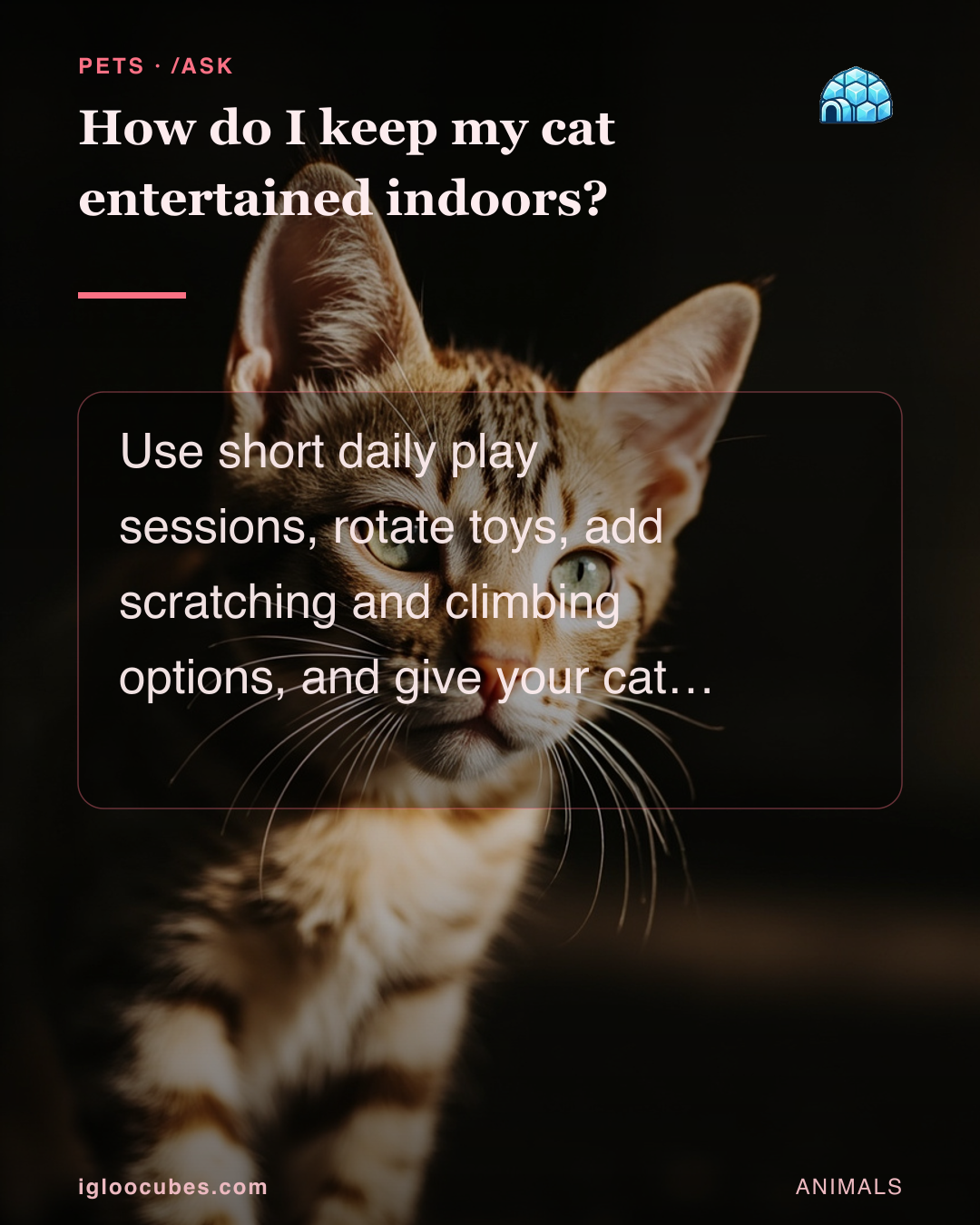
Indoor cats usually get bored because their environment is too predictable, not because they need more space. The fix is to give them more chances to act like cats.
Cornell recommends toys that encourage stalking, pouncing, and problem solving. Think wand toys, kick toys, puzzle feeders, cardboard boxes, window perches, scratching posts, and places to climb.
Short play sessions work better than one long burst. A few minutes of active play, a pause, then a treat or food reward can make the day feel more natural to a cat that would otherwise be hunting, resting, and hunting again.
If your cat starts scratching furniture, urinating outside the box, or acting withdrawn, that can be a sign the environment needs more enrichment or that stress is part of the problem.
The easiest habit is also the most repeatable: rotate toys, play every day, and make the room feel like a cat-sized territory instead of a waiting room.
A reliable cat toys is a small investment that makes this easier: cat toys.
Sources
More in Pets
Do I need pet insurance?
Pet insurance makes sense if an unexpected vet bill would strain your budget, especially while your pet is still healthy.
🐾 Pets 5 weeks ago 2 min readDo indoor cats need flea prevention?
Often, yes. Indoor cats can still pick up fleas from dogs, people, other animals, or a contaminated home.
🐾 Pets 4 weeks ago 2 min readHow can I tell if my cat is depressed?
A depressed or stressed cat may hide, eat less, sleep more, groom less, or stop playing, but medical causes can look the same.
🐾 Pets 3 weeks ago 3 min read