
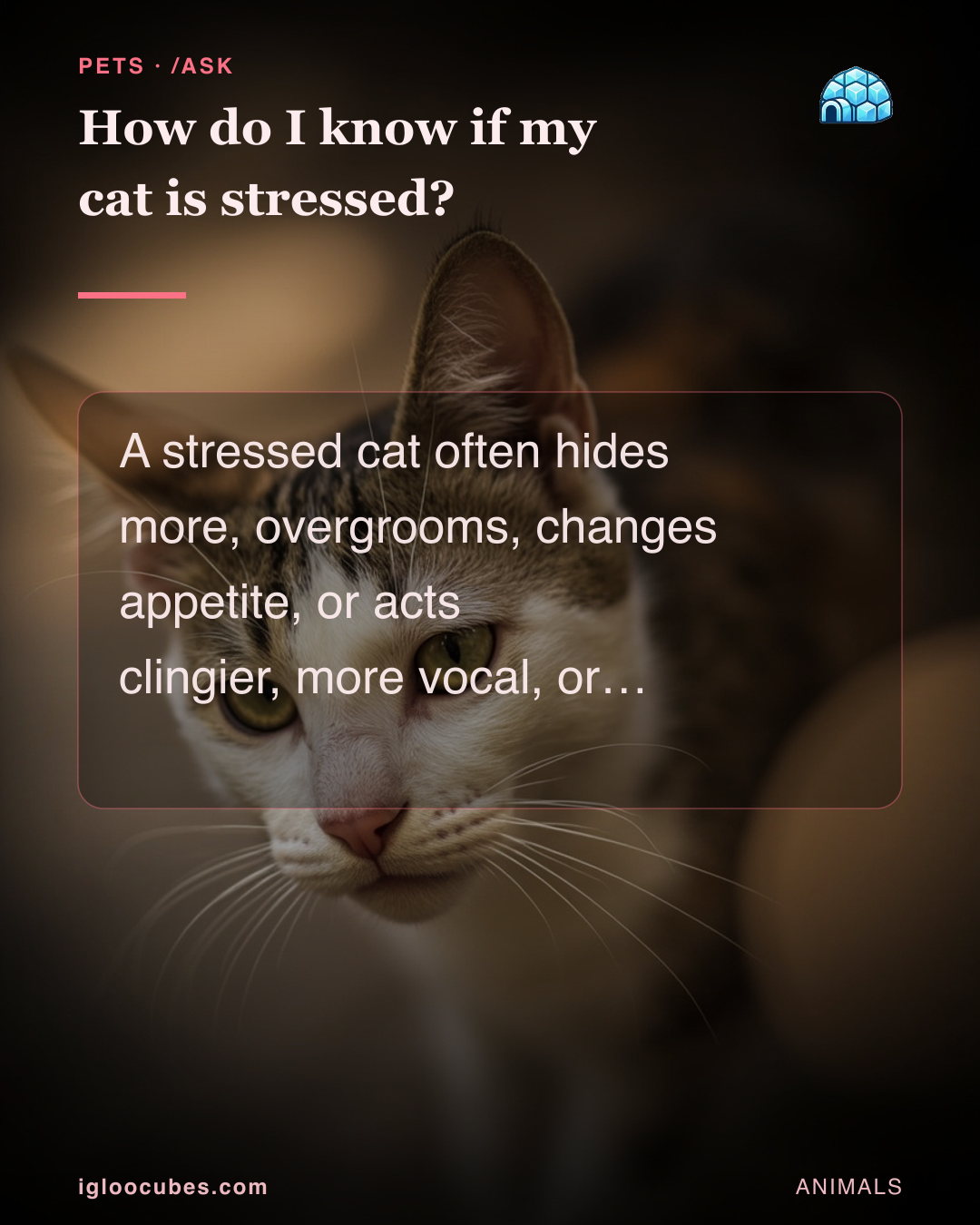
A stressed cat usually changes behavior before anything else. Common signs include hiding, freezing, ears held back, tail tucked or twitching, refusing treats, overgrooming, litter box changes, and being more vocal or irritable than usual. VCA also notes that fear-based stress can show up as panting, dilated pupils, or avoiding interaction.
The biggest clue is change. If a cat that is usually social suddenly hides, or a quiet cat starts yowling or missing the litter box, stress is one possible reason. Illness can look similar, so a new behavior change should not be written off as just a mood.
The practical move is to look for the trigger: a new pet, a move, a noisy room, a dirty litter box, or another animal blocking food or water. Fixing the environment often helps more than trying to “train” the emotion out of the cat.
More in Pets
Do I need pet insurance?
Pet insurance makes sense if an unexpected vet bill would strain your budget, especially while your pet is still healthy.
🐾 Pets 5 weeks ago 2 min readDo indoor cats need flea prevention?
Often, yes. Indoor cats can still pick up fleas from dogs, people, other animals, or a contaminated home.
🐾 Pets 4 weeks ago 2 min readHow can I tell if my cat is depressed?
A depressed or stressed cat may hide, eat less, sleep more, groom less, or stop playing, but medical causes can look the same.
🐾 Pets 3 weeks ago 3 min read