
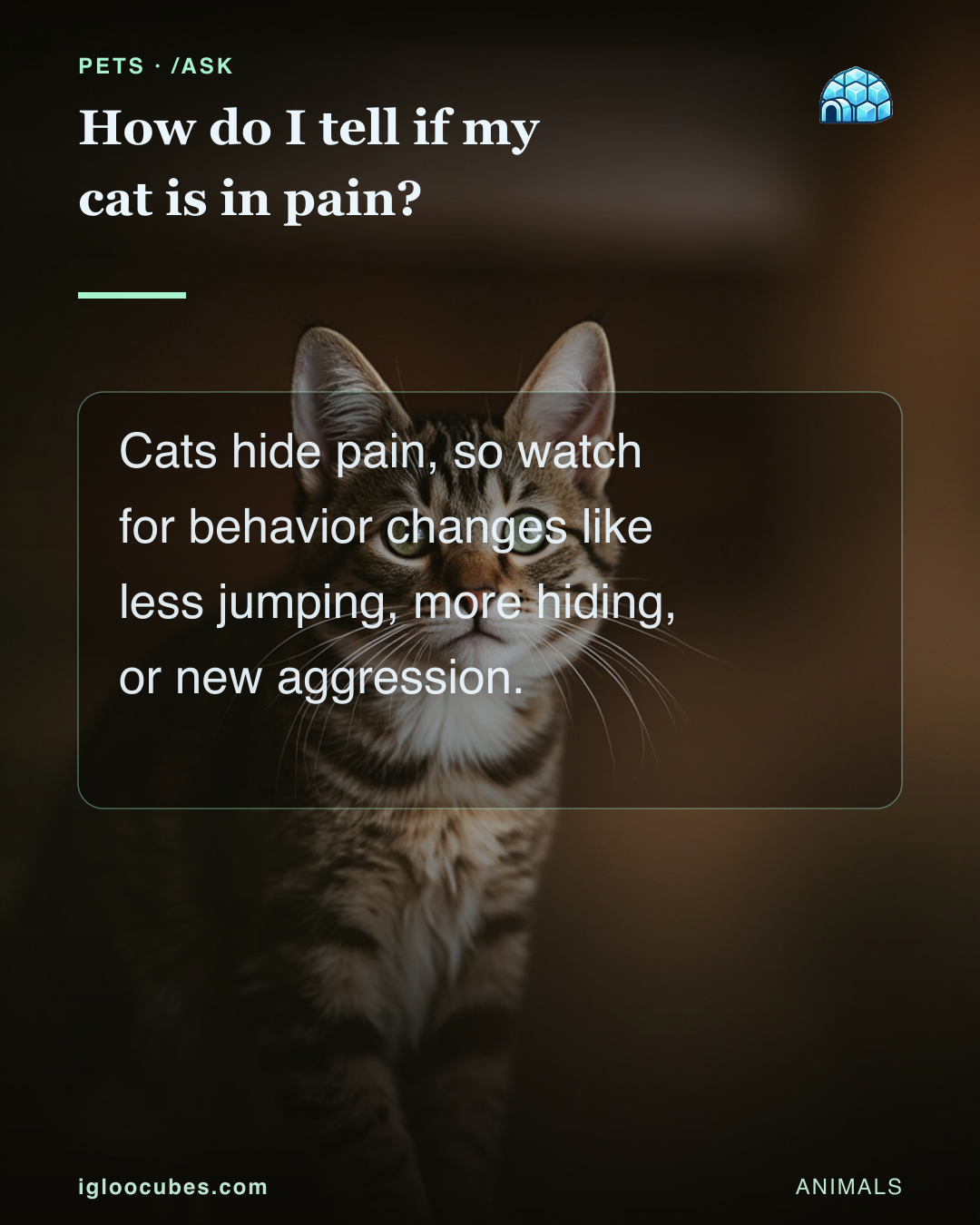
Cats are good at hiding pain, so the signs are often behavioral before they are dramatic. Cornell says pain can show up as trouble jumping, less grooming, litter box changes, hiding, or hissing and swatting when touched. The ASPCA notes that older cats may vocalize more when pain or another medical problem is underneath the behavior change.
What matters most is a change from your cat’s normal pattern. A cat that suddenly stops jumping onto furniture, avoids stairs, or quits grooming itself is telling you something even if it still eats a little and purrs when handled.
If the change is sudden, persistent, or paired with not eating, limping, or obvious distress, call your veterinarian. Cats do not usually get better by waiting and hoping.
Sources
More in Pets
Do I need pet insurance?
Pet insurance makes sense if an unexpected vet bill would strain your budget, especially while your pet is still healthy.
🐾 Pets 5 weeks ago 2 min readDo indoor cats need flea prevention?
Often, yes. Indoor cats can still pick up fleas from dogs, people, other animals, or a contaminated home.
🐾 Pets 4 weeks ago 2 min readHow can I tell if my cat is depressed?
A depressed or stressed cat may hide, eat less, sleep more, groom less, or stop playing, but medical causes can look the same.
🐾 Pets 3 weeks ago 3 min read