
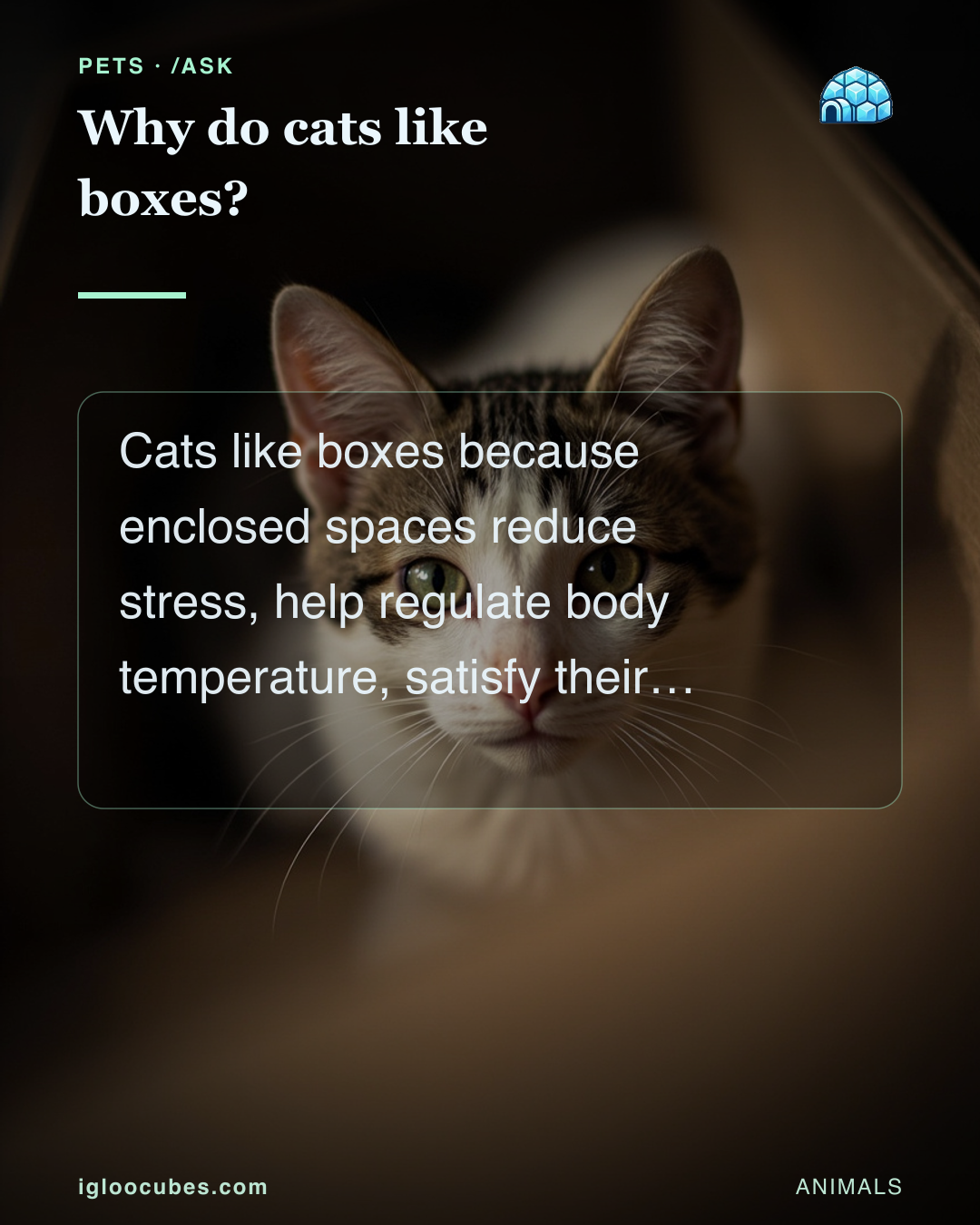
Boxes check several of a cat’s basic needs at once. First, they provide security: a confined space with a single entrance means nothing can sneak up from behind, so a cat can fully relax. Research from the University of Utrecht found that shelter cats given hiding boxes adapted to their new environment faster and showed significantly lower stress levels than cats without them.
Boxes also help cats regulate body temperature. Cardboard is a good insulator, and most cats are most comfortable at ambient temperatures between 86°F and 97°F — much warmer than the typical 70°F household. A box traps body heat, creating a cozy microclimate.
The hunting instinct plays a role too. Cats are ambush predators by nature. A box lets them hide, wait, and pounce on passing toys (or ankles) from cover, mimicking the stalking behavior they’d use in the wild. Even indoor cats that have never hunted retain this instinct. That’s also why a cat may seem equally fascinated by a square taped on the floor — the two-dimensional outline triggers the same “enclosed safe space” association.
More in Pets
Do I need pet insurance?
Pet insurance makes sense if an unexpected vet bill would strain your budget, especially while your pet is still healthy.
🐾 Pets 5 weeks ago 2 min readDo indoor cats need flea prevention?
Often, yes. Indoor cats can still pick up fleas from dogs, people, other animals, or a contaminated home.
🐾 Pets 4 weeks ago 2 min readHow can I tell if my cat is depressed?
A depressed or stressed cat may hide, eat less, sleep more, groom less, or stop playing, but medical causes can look the same.
🐾 Pets 3 weeks ago 3 min read