
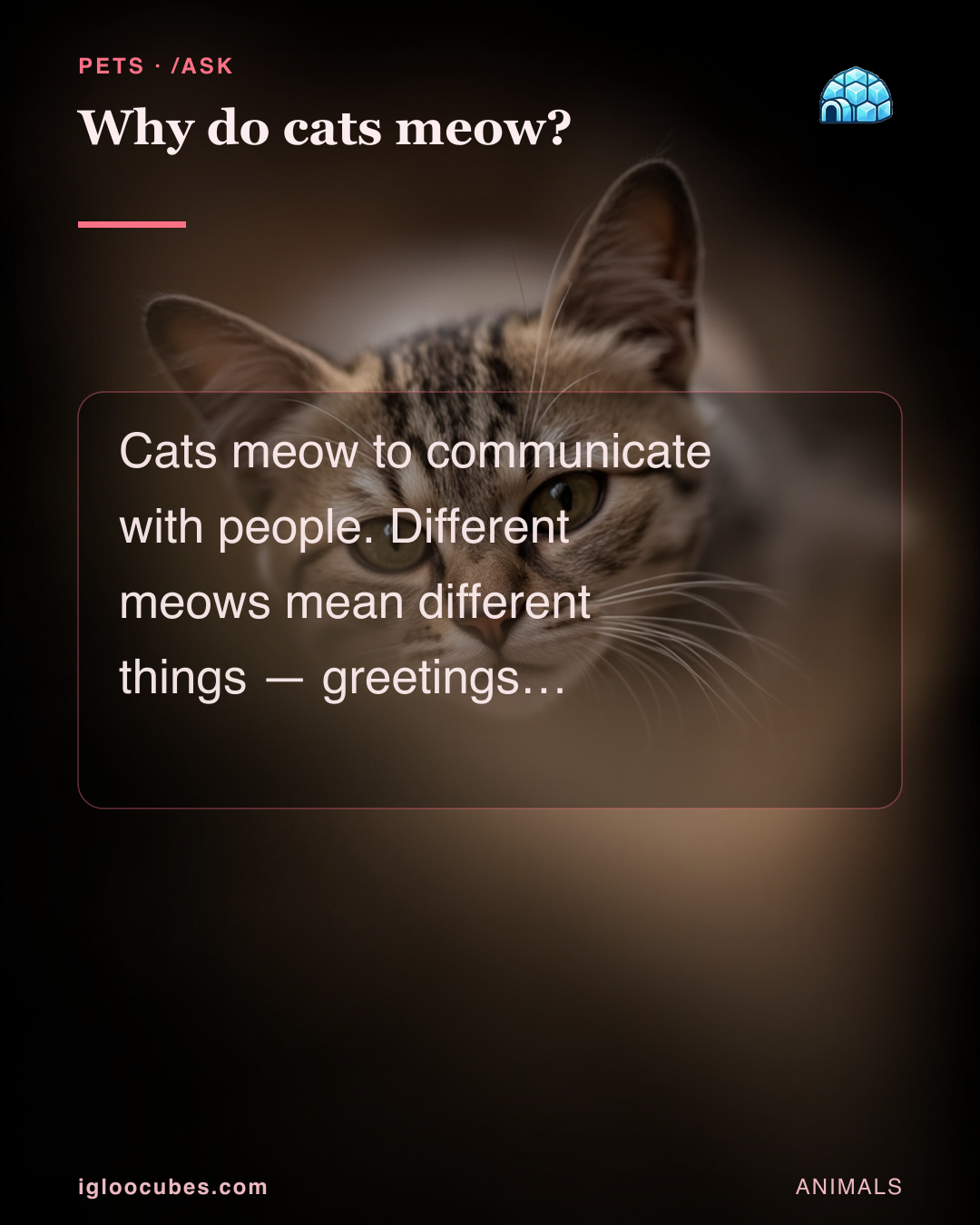
Kittens meow to their mother when they’re cold or hungry, but cats don’t meow to other cats as adults. Meowing is a behavior they specifically reserve for humans, and they keep doing it because it works — humans respond. It’s learned communication: your cat has figured out that certain sounds get you to open a door, fill a bowl, or pet them.
Common meanings depend on the type of meow. Short, soft meows are usually greetings — the cat equivalent of “hey.” Repeated mid-pitch meows often mean “I want something” (food, play, a door opened). Long, drawn-out meows can signal worry or frustration. High-pitched, frequent meowing sometimes indicates pain or illness — if the pattern changes suddenly, a vet check is worth it.
Some cats simply meow more than others. Siamese and other vocal breeds are known for being chatty. Yowling — a longer, more melodic version of a meow — is different: adult cats do yowl at each other, especially during breeding season. A spayed or neutered cat that starts yowling might be confused, anxious, or developing a medical issue.
Sources
More in Pets
Do I need pet insurance?
Pet insurance makes sense if an unexpected vet bill would strain your budget, especially while your pet is still healthy.
🐾 Pets 5 weeks ago 2 min readDo indoor cats need flea prevention?
Often, yes. Indoor cats can still pick up fleas from dogs, people, other animals, or a contaminated home.
🐾 Pets 4 weeks ago 2 min readHow can I tell if my cat is depressed?
A depressed or stressed cat may hide, eat less, sleep more, groom less, or stop playing, but medical causes can look the same.
🐾 Pets 3 weeks ago 3 min read