
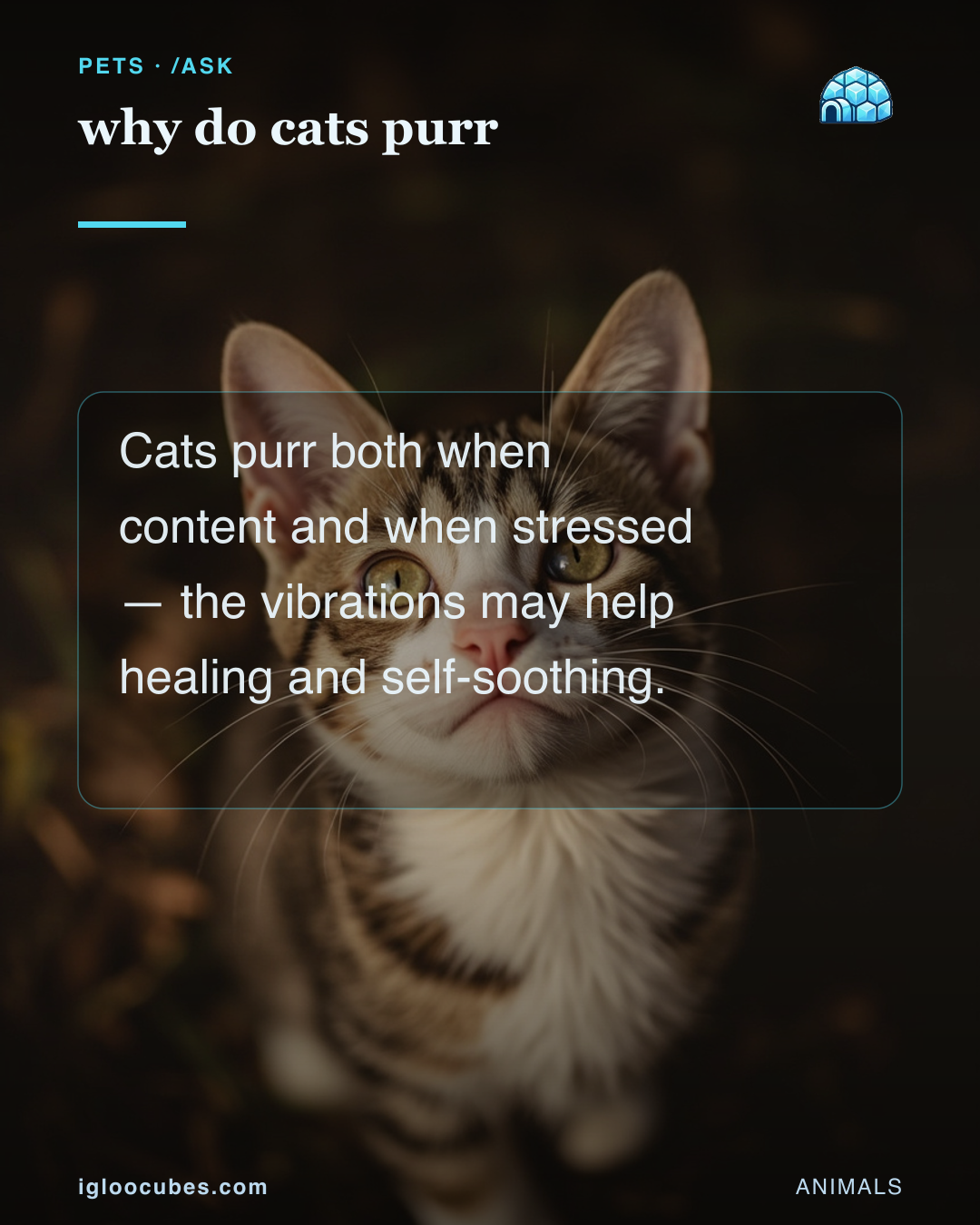
Cats purr for more than just contentment. While a purring cat on your lap is likely happy and relaxed, cats also purr when they’re frightened, injured, in pain, or even during labor. The leading scientific explanation is that purring — which produces vibrations between 25 and 150 Hz — is a form of self-repair. Studies suggest these frequencies can promote bone density, reduce pain and swelling, and accelerate tissue healing. This is why you sometimes see cats purring while resting after an injury or even as they’re dying. Socially, purring helps kittens bond with their mother; kittens purr while nursing to signal they’re safe, and the mother may purr back to comfort them. Adult cats also use purring as a way to maintain contact with humans and other cats they trust.
More in Pets
Do I need pet insurance?
Pet insurance makes sense if an unexpected vet bill would strain your budget, especially while your pet is still healthy.
🐾 Pets 5 weeks ago 2 min readDo indoor cats need flea prevention?
Often, yes. Indoor cats can still pick up fleas from dogs, people, other animals, or a contaminated home.
🐾 Pets 4 weeks ago 2 min readHow can I tell if my cat is depressed?
A depressed or stressed cat may hide, eat less, sleep more, groom less, or stop playing, but medical causes can look the same.
🐾 Pets 3 weeks ago 3 min read