
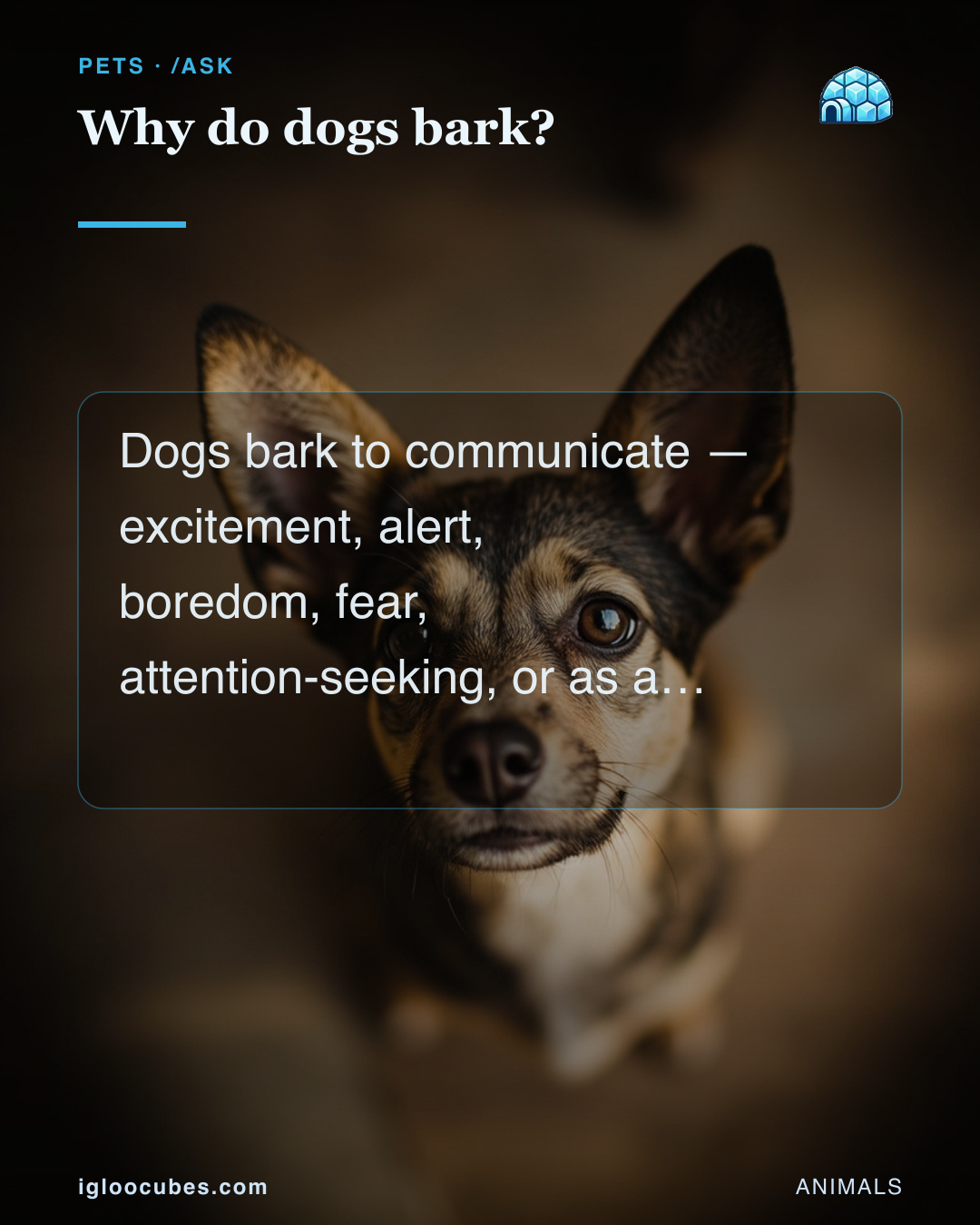
Barking is how dogs communicate, and context tells you what they’re saying. A few sharp, mid-pitch barks usually mean alert or excitement — someone’s at the door or a squirrel is in the yard. Continuous barking with a stiff body suggests a warning or territorial response. A higher-pitched, repetitive bark often signals excitement or playfulness, while a lower, drawn-out bark can indicate boredom or frustration.
Attention-seeking barking happens because it works — even negative attention (yelling) reinforces the behavior. Dogs also bark out of separation anxiety, fear (loud noises, unfamiliar situations), or when they’re excited but frustrated, like a dog that barks at children playing in the street because it wants to join them but can’t.
Barking is normal, not something to eliminate entirely. The goal is to manage excessive barking: give your dog enough exercise, don’t reward demand barking with attention, and address the underlying trigger — boredom needs more engagement, while fear needs a different approach than territorial barking.
More in Pets
Do I need pet insurance?
Pet insurance makes sense if an unexpected vet bill would strain your budget, especially while your pet is still healthy.
🐾 Pets 5 weeks ago 2 min readDo indoor cats need flea prevention?
Often, yes. Indoor cats can still pick up fleas from dogs, people, other animals, or a contaminated home.
🐾 Pets 4 weeks ago 2 min readHow can I tell if my cat is depressed?
A depressed or stressed cat may hide, eat less, sleep more, groom less, or stop playing, but medical causes can look the same.
🐾 Pets 3 weeks ago 3 min read