
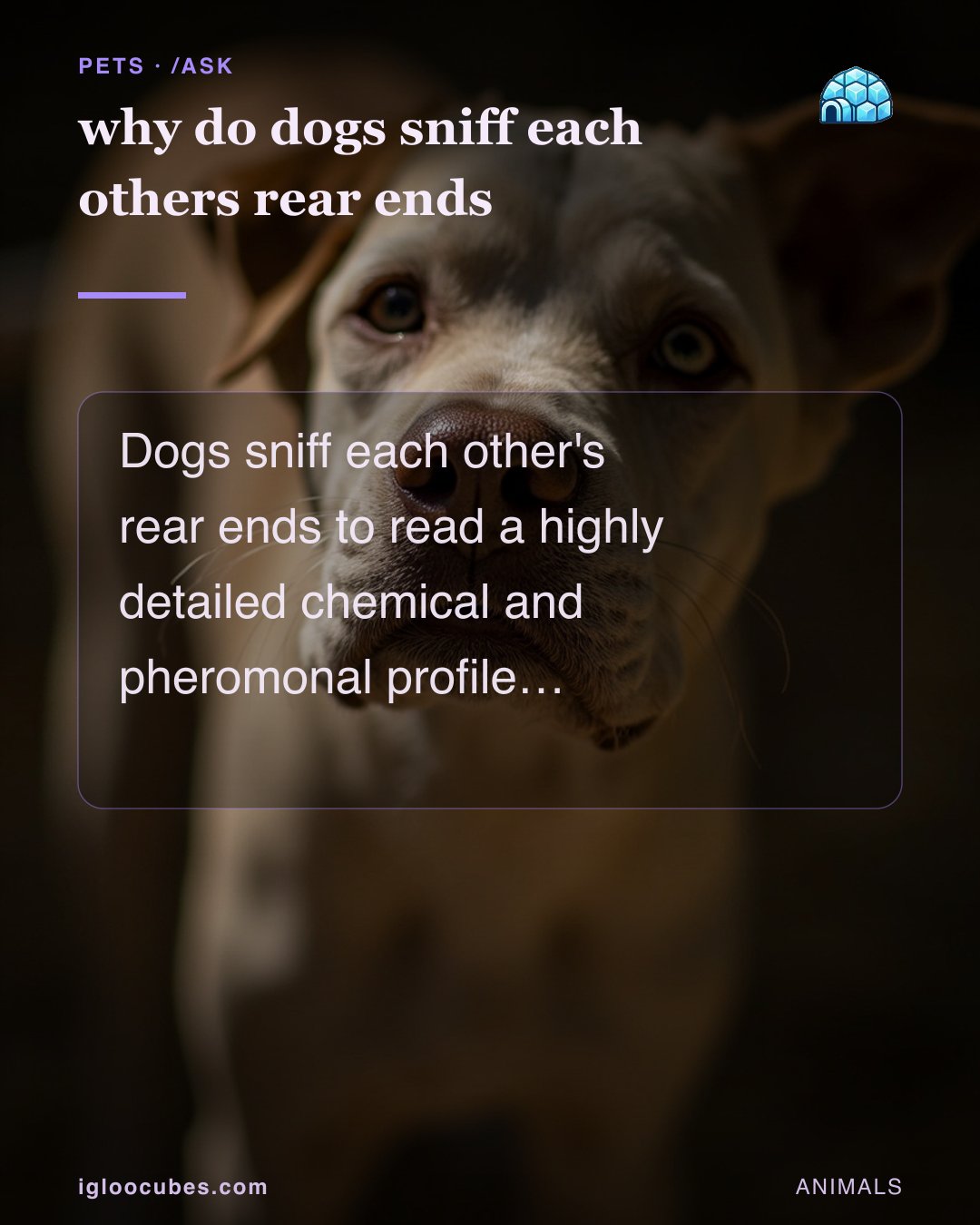
While butt-sniffing seems bizarre to humans, it is the canine equivalent of a detailed greeting and a firm handshake. A dog’s sense of smell is up to one hundred thousand times more powerful than ours, allowing them to gather an immense amount of biological information through aroma.
The focus of this behavior is the anal sacs, which are small glands located on either side of the dog’s anus. These glands secrete volatile chemical compounds and pheromones. When dogs sniff each other, they are reading a highly detailed “chemical profile” of the other animal. This scent profile instantly communicates the dog’s sex, age, diet, health status, and reproductive readiness. It can even convey emotional states, such as whether a dog is feeling anxious or calm.
To process these complex chemical signals, dogs use their Jacobson’s organ, also known as the vomeronasal organ. This specialized sensory structure is located in the roof of the mouth, with ducts opening just behind the front teeth. It bypasses normal nasal passages, sending chemical information directly to the brain. This allows dogs to identify and evaluate other dogs with remarkable accuracy without any visual cues.
Sources
More in Pets
Do I need pet insurance?
Pet insurance makes sense if an unexpected vet bill would strain your budget, especially while your pet is still healthy.
🐾 Pets 5 weeks ago 2 min readDo indoor cats need flea prevention?
Often, yes. Indoor cats can still pick up fleas from dogs, people, other animals, or a contaminated home.
🐾 Pets 4 weeks ago 2 min readHow can I tell if my cat is depressed?
A depressed or stressed cat may hide, eat less, sleep more, groom less, or stop playing, but medical causes can look the same.
🐾 Pets 3 weeks ago 3 min read