
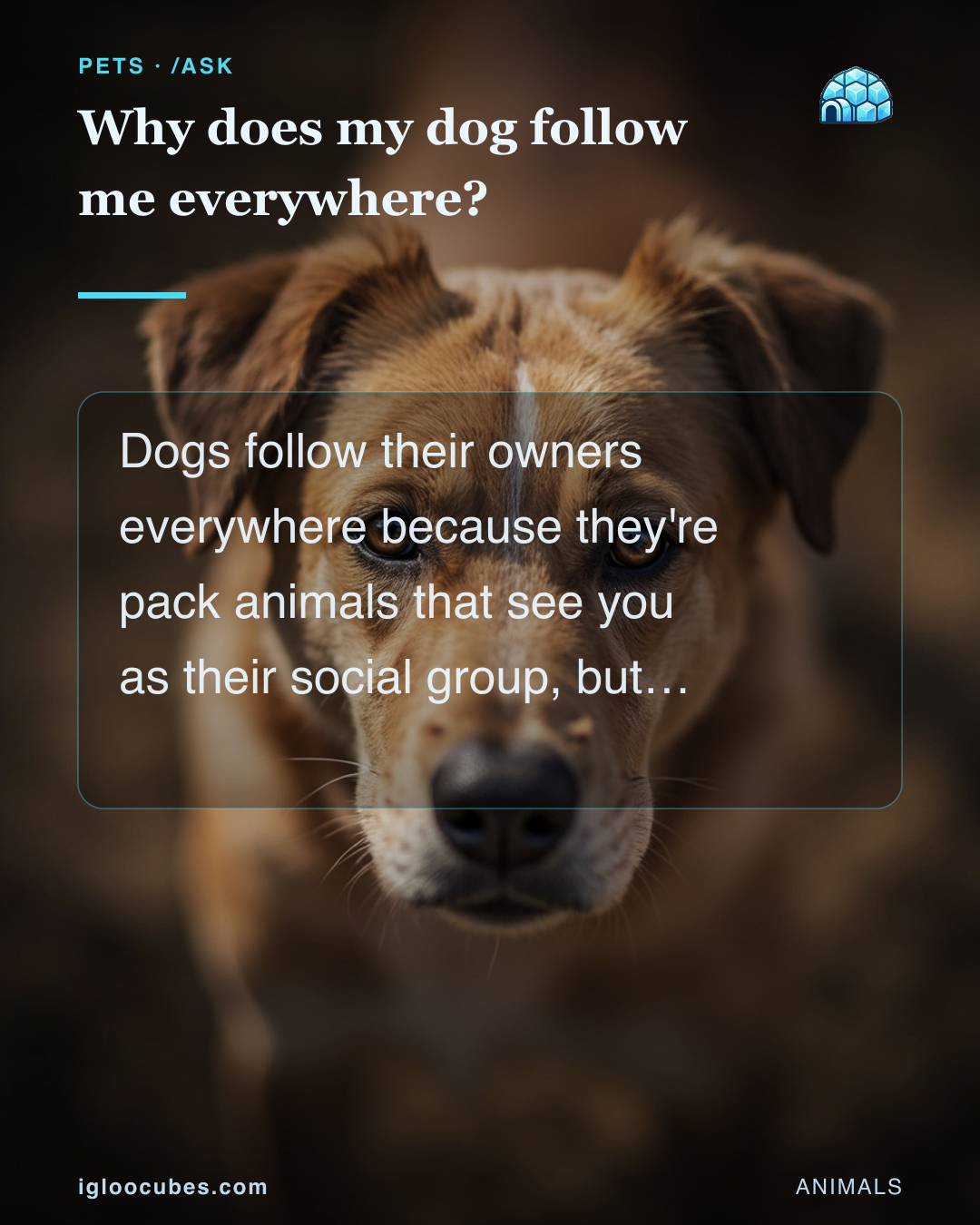
Most dogs follow their owners out of instinct and affection. Dogs are pack animals, and you’re the leader of their pack. Following you is natural social behavior — they want to know where you are, what you’re doing, and whether you might do something interesting like open the fridge.
But there’s also a learned component. If your dog gets a treat, a walk, or even just attention every time they follow you from room to room, you’ve accidentally trained them to do it. The behavior becomes self-reinforcing: “follow human → good thing happens → follow again.”
Sometimes it signals something else. Dogs that follow constantly — especially if they also pant, pace, or whine when you’re out of sight — may have separation anxiety. A dog that follows mainly to the kitchen or the treat cabinet is just being strategic. A dog that follows to every single room even when nothing rewarding happens is more likely acting on the pack bond.
If the following becomes a safety issue (tripping hazard), teach a place command like “go to your bed” and reward calm settling there instead.
More in Pets
Do I need pet insurance?
Pet insurance makes sense if an unexpected vet bill would strain your budget, especially while your pet is still healthy.
🐾 Pets 5 weeks ago 2 min readDo indoor cats need flea prevention?
Often, yes. Indoor cats can still pick up fleas from dogs, people, other animals, or a contaminated home.
🐾 Pets 4 weeks ago 2 min readHow can I tell if my cat is depressed?
A depressed or stressed cat may hide, eat less, sleep more, groom less, or stop playing, but medical causes can look the same.
🐾 Pets 3 weeks ago 3 min read