
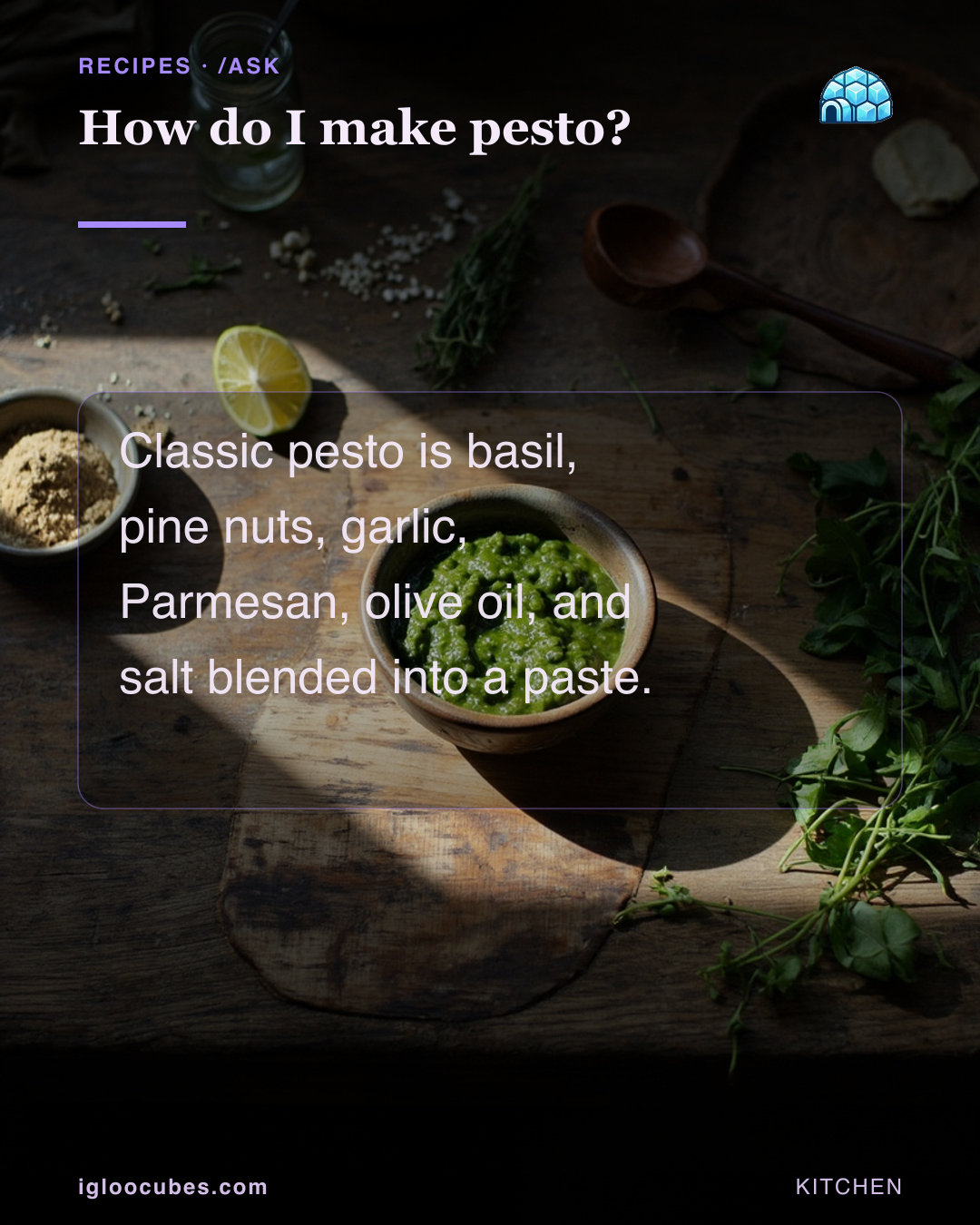
Make pesto by blending basil, pine nuts, garlic, Parmesan, olive oil, and salt until it becomes a coarse paste. The classic version is bright and a little textured, not completely smooth.
The easiest way to keep the flavor fresh is to pulse in short bursts and drizzle in the oil slowly. If the pesto feels too thick, add a little more oil or a spoonful of pasta water. If you swap the basil for arugula, cilantro, or another green, you still get a good sauce, but it is a variation rather than the classic Genovese version.
The trick is to avoid over-processing. Pesto tastes better when the ingredients still have some character and the garlic does not take over the whole bowl.
A small food processor makes the job easier and gives you a more consistent texture: small food processor.
So the short answer is to blend the ingredients gently, adjust the oil for texture, and serve it fresh over pasta, bread, or vegetables.
Pesto also stores better if you press a thin layer of oil on top before refrigerating it. That little barrier helps keep the basil from turning dark too fast and makes leftover pesto taste fresher the next day. If you make a bigger batch, freezing it in small portions is a smart way to keep it from going to waste.
Fresh pesto also tastes best with a little salt at the end, not just in the mix.
More in Cooking
How do I boil eggs so they peel easily?
Use slightly older eggs, cool them fast, and peel under running water.
🍳 Cooking 4 weeks ago 2 min readHow do I choose a meal prep container?
Choose based on reheating, freezing, and lid fit, because the right container is the one that matches how you store food.
🍳 Cooking 1 week ago 3 min readHow do I cook a steak on the stove?
Pat the steak dry, salt it heavily, sear in a hot cast-iron pan with oil for 3-5 minutes per side, and cook to 145°F internal temperature for medium.
🍳 Cooking 6 weeks ago 2 min read