
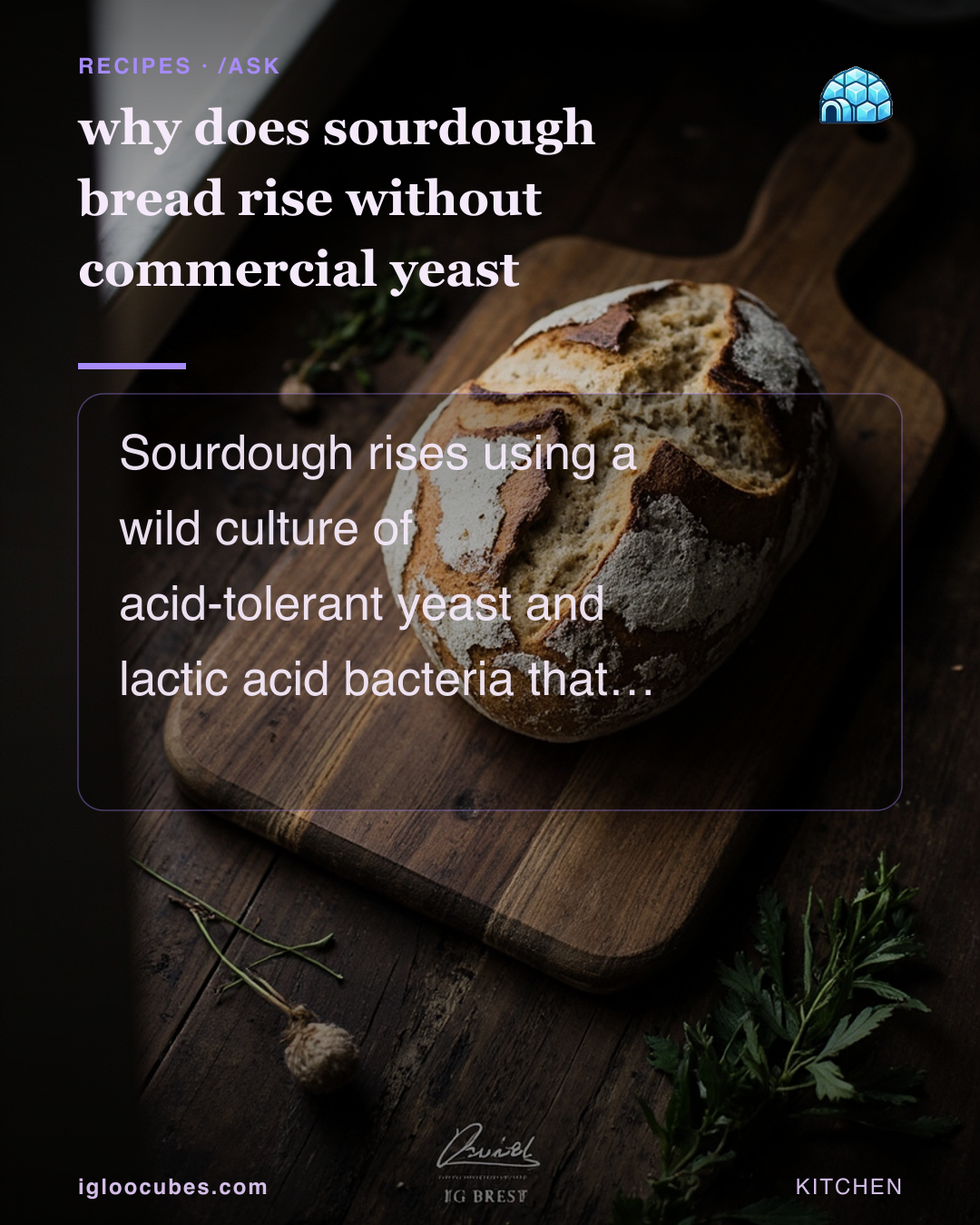
Sourdough bread does not require commercial, packaged yeast to rise. Instead, it relies on a wild fermentation process driven by a symbiotic culture of wild yeast and beneficial bacteria. This living ecosystem is nurtured from the natural flour and environment.
The two main players in a sourdough starter are wild yeast and lactic acid bacteria. Unlike commercial baker’s yeast, which cannot survive in acidic environments, wild yeast species are highly acid-tolerant. The bacteria consume simple sugars in the flour and produce lactic and acetic acids. These acids lower the pH of the dough, giving sourdough its distinct tangy flavor and creating an environment that deters harmful mold and pathogens.
The wild yeast feeds on other sugars in the flour that the bacteria cannot consume. As the yeast digests these starches, it produces carbon dioxide gas and ethanol. The carbon dioxide gets trapped within the dough’s gluten matrix, creating bubbles that expand and cause the bread to rise beautifully during proofing and baking.
Starting your own culture from scratch is a rewarding process, and utilizing a complete sourdough starter kit can help you measure temperature, feed your culture, and proof your first loaves with consistent success.
Sources
More in Cooking
How do I boil eggs so they peel easily?
Use slightly older eggs, cool them fast, and peel under running water.
🍳 Cooking 4 weeks ago 2 min readHow do I choose a meal prep container?
Choose based on reheating, freezing, and lid fit, because the right container is the one that matches how you store food.
🍳 Cooking 1 week ago 3 min readHow do I cook a steak on the stove?
Pat the steak dry, salt it heavily, sear in a hot cast-iron pan with oil for 3-5 minutes per side, and cook to 145°F internal temperature for medium.
🍳 Cooking 6 weeks ago 2 min read