
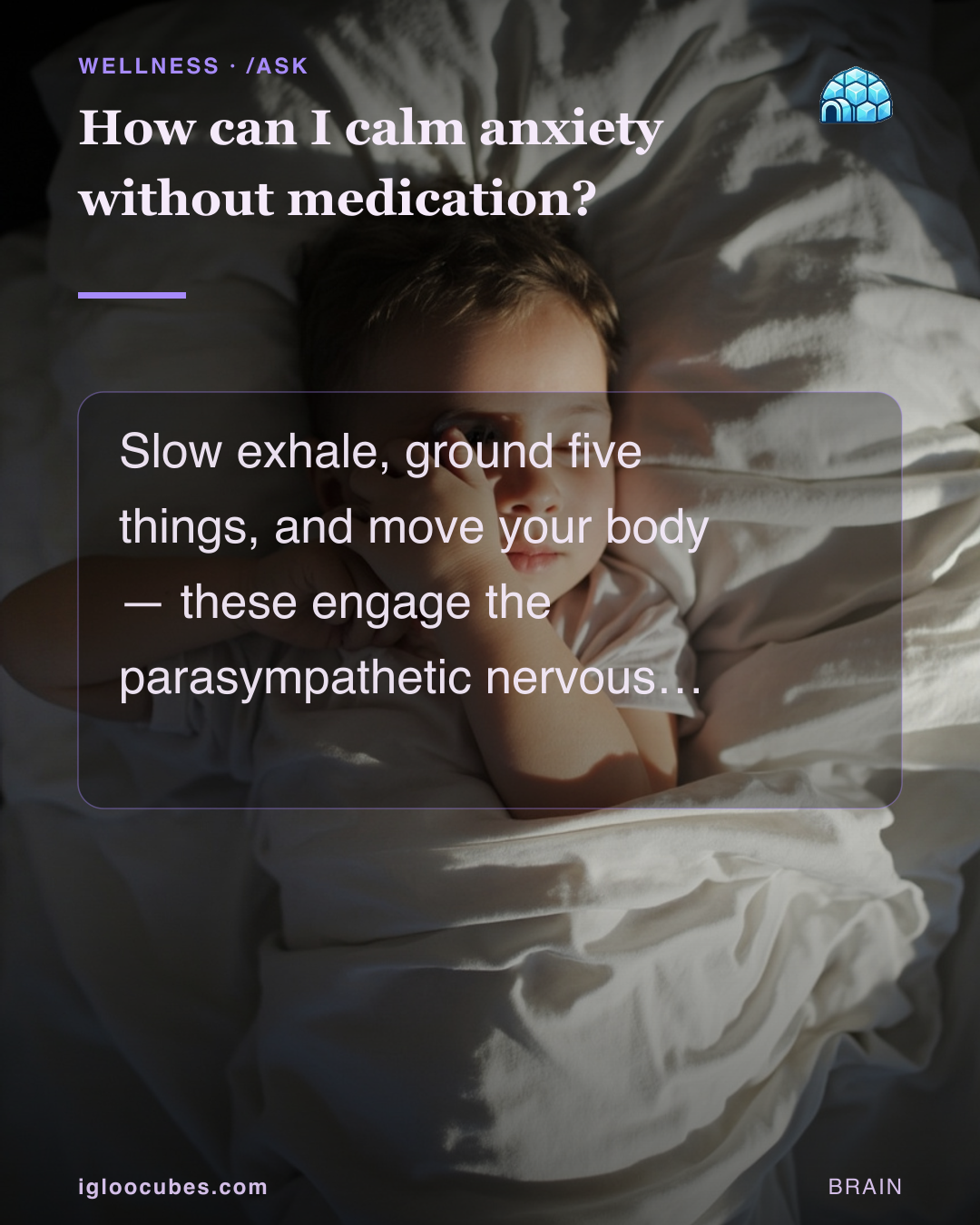
Anxiety is the body’s alarm system stuck in the “on” position — heart rate up, breath shallow, muscles tense, attention narrowed to the threat. The fastest ways to interrupt it work by signaling safety to the nervous system. None of them are magic, but they have real physiological effects.
In the moment (5 minutes):
- Slow exhale. Inhale through your nose for about 4 seconds, exhale through your mouth for 6–8 seconds. The longer exhale is what activates the vagus nerve and shifts you out of fight-or-flight. Even a few rounds drop heart rate.
- Ground with five senses. Name 5 things you can see, 4 you can hear, 3 you can touch, 2 you can smell, 1 you can taste. It’s not a cure — it’s a way to interrupt the spiral and put your attention back in the room.
- Move your body. A short walk, ten jumping jacks, or even standing and shaking out your arms resets the muscle tension loop. Anxiety lives partly in the body; movement gives the body somewhere to put the energy.
On a daily basis (weeks, not minutes):
- Sleep. Chronic sleep deprivation is one of the most reliable ways to manufacture anxiety in people who have no underlying disorder. 7–9 hours, consistent wake time, no screens an hour before bed.
- Movement you can keep doing. The anxiety benefits of exercise come from regular aerobic activity — three to five times a week at moderate intensity — not from one heroic session you hate.
- Caffeine and alcohol. Both aggravate anxiety. Caffeine amplifies the physiological arousal; alcohol disrupts sleep architecture and rebounds into higher anxiety the next day.
- A therapist or counselor. Cognitive-behavioral therapy (CBT) is the best-studied non-medication treatment for anxiety disorders. It is structured, time-limited, and works for most people.
When to talk to a professional:
If anxiety is interfering with sleep, work, relationships, or daily decisions more days than not for a few weeks — or if you have panic attacks, intrusive thoughts, or trauma flashbacks — that’s not a “calm down” problem. Those are real medical conditions with effective treatments, including therapy, medication, or both. NIMH’s anxiety page is a good starting point to understand what’s normal and what isn’t.
The quick tools above help anyone. For clinical anxiety, they should be paired with professional support, not used as a substitute for it.
Sources
More in Wellness
Are naps good or bad for you?
Short naps (20–30 minutes) reliably boost alertness without hurting nighttime sleep. Long or late naps — past 3 p.m. or over an hour — make it harder to fall asleep at night and leave you groggier.
🧘 Wellness 5 weeks ago 3 min readWhat are the benefits of daily meditation?
The largest meta-analysis to date found moderate evidence that meditation programs reduce anxiety, depression, and pain-related distress — with modest effect sizes and a clear dose-response to daily practice.
🧘 Wellness 8 weeks ago 2 min readCan most people actually handle polyamory?
Some people can, and a meaningful minority already are — but the structure only works with explicit consent, communication, and a willingness to do maintenance work most people underestimate.
🧘 Wellness 1 week ago 3 min read