
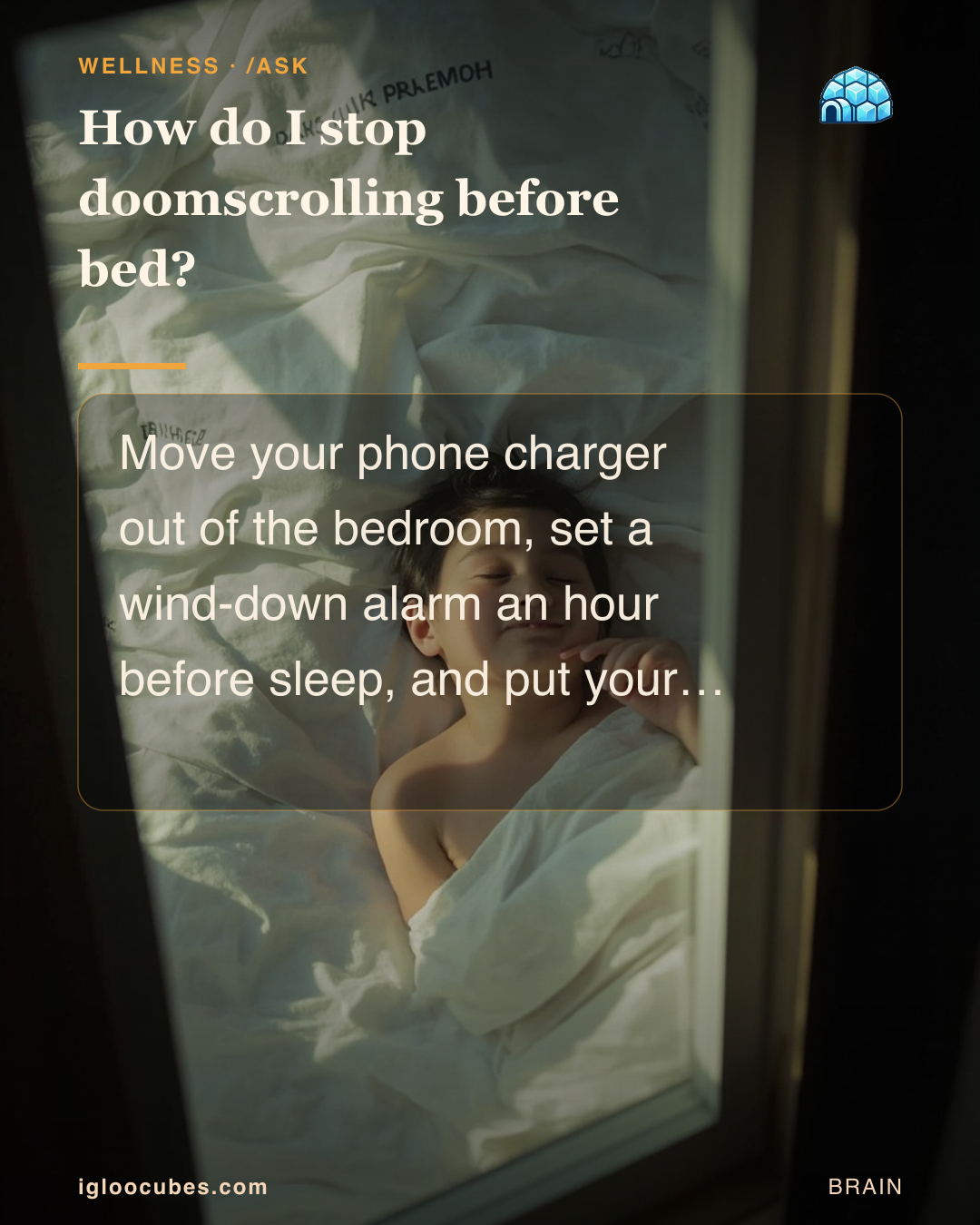
Doomscrolling before bed is mostly an environmental problem, not a willpower problem. Most people who say they “can’t put their phone down” are lying in bed with a fully charged phone that is also their alarm clock. Make it harder to reach the phone, and scrolling drops sharply within a week.
The four-step wind-down that actually works.
- One hour before bed, set a “screens off” alarm. Not a “I’ll think about putting the phone down” alarm — an actual alarm. Pick a fixed time that lines up with the hour you actually want to be asleep.
- Charge the phone in another room. Not on the nightstand. In the kitchen. In the entryway. The single biggest behavior change you can make for sleep quality.
- Put a real alarm clock on the nightstand. A $10 analog clock or a $20 digital alarm. Removes the “I need the phone as my alarm” excuse that’s the most common reason people don’t move the charger.
- Replace the phone time with one physical activity. A book, a magazine, a journal, a puzzle. Doesn’t have to be deep or mindful — just offline. The blue light and the engagement loop are what do the most damage, not the specific content.
Why it works.
A 2022 review in Sleep Medicine Reviews of the effects of phone use before sleep found consistent reductions in sleep onset, sleep quality, and morning alertness — with effects comparable to caffeine. The mechanism is the blue light suppressing melatonin, plus the engagement loop keeping the brain awake. The fix is the same for both: a hard stop on the phone at least an hour before bed.
Why willpower fails.
“The phone is right there, I’ll just check one thing” works against you because it’s true. One thing leads to another. The honest move is to remove the option. Most people who do this for a week report that the urge to scroll drops sharply — the phone wasn’t the only thing they had to do at night.
When it isn’t the phone.
If you’re using the phone to manage anxiety, rumination, or panic in the hour before bed, the wind-down won’t fix that. Talk to a clinician about what the phone is replacing — therapy is often a better long-term answer than habit change.
A one-week challenge:
- Move the phone charger to the kitchen.
- Buy a $10 alarm clock for the nightstand.
- Set a 9:30 p.m. alarm labeled “screens off.”
- Pick one physical activity to do instead.
Most people who try this for a week report falling asleep faster, sleeping more deeply, and waking up less groggy. It works because the phone isn’t a hard habit to break — it’s a hard habit to break when the phone is on the nightstand.
Sources
Want the full picture?
🧊 Meditation and the Brain — What Science Actually Knows
Meditation doesn't just calm your mind—it physically changes your brain structure, quiets your default mode network, and may even slow cellular aging. But the research is messier than most headlines suggest.
More in Wellness
Are naps good or bad for you?
Short naps (20–30 minutes) reliably boost alertness without hurting nighttime sleep. Long or late naps — past 3 p.m. or over an hour — make it harder to fall asleep at night and leave you groggier.
🧘 Wellness 5 weeks ago 3 min readWhat are the benefits of daily meditation?
The largest meta-analysis to date found moderate evidence that meditation programs reduce anxiety, depression, and pain-related distress — with modest effect sizes and a clear dose-response to daily practice.
🧘 Wellness 8 weeks ago 2 min readCan most people actually handle polyamory?
Some people can, and a meaningful minority already are — but the structure only works with explicit consent, communication, and a willingness to do maintenance work most people underestimate.
🧘 Wellness 1 week ago 3 min read