
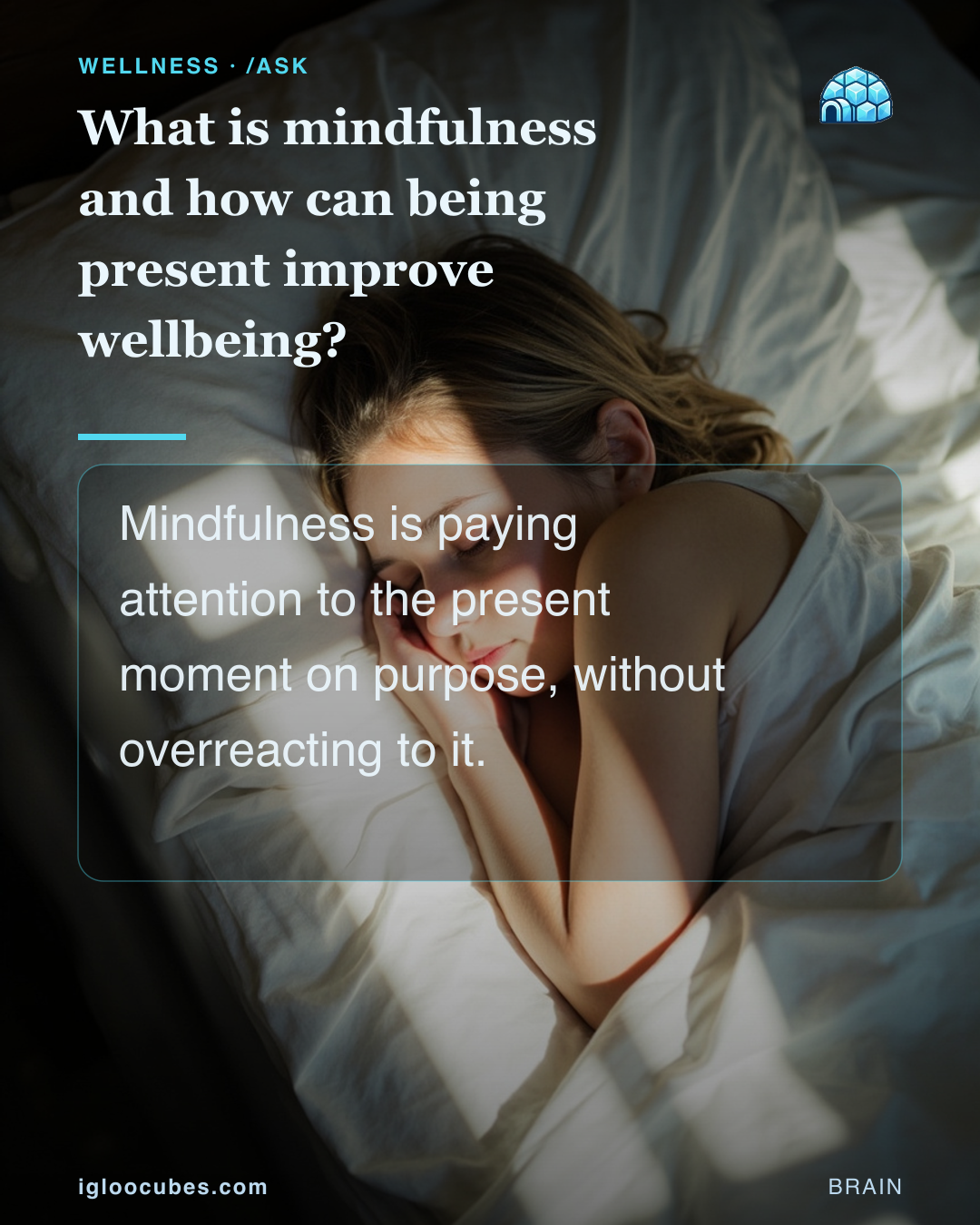
Mindfulness means paying attention to what is happening right now without immediately trying to fix, judge, or escape it. In practice, it is the habit of noticing thoughts, feelings, and sensations before they drag you around.
It overlaps with meditation, but you can also practice it while walking, eating, working, or talking. The key skill is awareness before reaction.
The point is not to become perfectly calm. It is to become a little less automatic.
Want the full picture?
🧊 Meditation and the Brain — What Science Actually Knows
Meditation doesn't just calm your mind—it physically changes your brain structure, quiets your default mode network, and may even slow cellular aging. But the research is messier than most headlines suggest.
More in Wellness
Are naps good or bad for you?
Short naps (20–30 minutes) reliably boost alertness without hurting nighttime sleep. Long or late naps — past 3 p.m. or over an hour — make it harder to fall asleep at night and leave you groggier.
🧘 Wellness 5 weeks ago 3 min readWhat are the benefits of daily meditation?
The largest meta-analysis to date found moderate evidence that meditation programs reduce anxiety, depression, and pain-related distress — with modest effect sizes and a clear dose-response to daily practice.
🧘 Wellness 8 weeks ago 2 min readCan most people actually handle polyamory?
Some people can, and a meaningful minority already are — but the structure only works with explicit consent, communication, and a willingness to do maintenance work most people underestimate.
🧘 Wellness 1 week ago 3 min read